more more i cannot parse it any further
oh god silence the voice left me now
im forcing the issue to tissue two tissue gristle
makes a fine gift if the the person you love ...
oh goddamnit it left it left it left
shit i'm stalling hoping something from the ether will utter
profundities through me
she's through with me
taken up with another man a better man i should say
by the size of his bank account
though hes a slavedriver
will she ever ever ever turn to look over her shoulder
at the past gassed like so many hapless jews and slavs
who in their mongrel nonaryan filth filched the betterman uber-man
fuck fuck fuck fuck i'm down on my luck
such stupid facile rhyme
im sure youre tired of it now somehow i dont care dont care anymore
dont even love her
im a limpdick asshole completely disappointing
this automatic writing inditing an indictment i will carry to my grave
the slave slav driven hence by him whos with her now
giving her the fantasy she's always craved
a slave to underhanded advert ploys she toys with me
in both silence and speech
but she doesnt care for me anymore im sure
but it does not matter
the latter will of course chase me to an early grave
the slave i am till judgment day . . .
30 December 2005
14 December 2005
In Imitation of the Symbolists
Scrape the seed of Onan from the lettuce leaf, and let us go and seed new fields to bring forth other fruits -- stranger fruits heretofore untasted by the insensate palates of drudges, dandies, and other such atoms of a crowd turbid with its idiocy. Yours is the wreckage; mine is the wreckage! This is our portion, our reckoning.
So pull the rusted shard slowly from your heel, lover; blood may be tears for ones such as us!
So pull the rusted shard slowly from your heel, lover; blood may be tears for ones such as us!
15 November 2005
Joe Francis
that Cheshire grin
(his attorney’s suggestion) —
a porcelain dam
through which the rot
of a misspent life will never seep
while through the nation
his cameras creep
to seize and freeze
the swells of coeds,
in exchange for trademark logowear
sewn by third-world labor.
(his attorney’s suggestion) —
a porcelain dam
through which the rot
of a misspent life will never seep
while through the nation
his cameras creep
to seize and freeze
the swells of coeds,
in exchange for trademark logowear
sewn by third-world labor.
14 November 2005
Birthday Reflections
On Thursday I turn 34. A third of a century falls from me into the abyss. A week from today will commemorate my now ex-wife's announcement of her intention to leave me, an act which effectively ensured that my thirty-third year of life would be a rancid one. And it has.
Needless to say, I find myself quite pensive, quite sorrowful. A tossed-away lover, a spurned husband, a misfit toy banished to its island trashheap -- all these things I have been this year.
I drink too much, a habit formed as a result of the vile events of the past year; I pine too much, a habit formed as a result of a lifetime spent out-of-step, alienated, alone upon the treacherous cliffs of acute perception.
I no longer expect vindication or "closure"; sometimes wounds close poorly, sealing within themselves an abcess that throbs and aches forever.
Needless to say, I find myself quite pensive, quite sorrowful. A tossed-away lover, a spurned husband, a misfit toy banished to its island trashheap -- all these things I have been this year.
I drink too much, a habit formed as a result of the vile events of the past year; I pine too much, a habit formed as a result of a lifetime spent out-of-step, alienated, alone upon the treacherous cliffs of acute perception.
I no longer expect vindication or "closure"; sometimes wounds close poorly, sealing within themselves an abcess that throbs and aches forever.
03 October 2005
Found Verse
Below is a posting from some website entitled American Renaissance (AmRen for short) -- wretchedly reactionary stuff, to be sure. This post, however, amused me because its line breaks were odd, suggesting a stanza. I present it here so that any passerby may enjoy the humorously inadvertent prosody of an individual I can only assume is a true American Renaissance man.
A teacher friend swears this is true:
As she called the roll on the first day of class,
she discovered that she had a Black named Vagina in her class. Seeking to spare the child (and others) embarassment, she suggested that everyone call the girl Gina.
"No Ma'am," Vagina answered, "My name Vagina."
Posted by The writer formerly known as Jim E. at 9:44 AM on April 15
21 September 2005
19 September 2005
18 September 2005
16 September 2005
13 September 2005
12 September 2005
11 September 2005
21 August 2005
Let Us Now Praise Foolish Men . . .
. . . And women, if it comes to that (I won't discriminate).
Oh, you who look to the ivory tower as the bastion of human knowledge you so desperately want it to be, let me assure you, it is a refuge for knaves, scoundrels and sycophants of the first order. You will never escape unmolested; you will clap your hands to you ears to block the bleating of herds, the shrieks and hoots of scornful children. Absolutely, positively no escape. Academes crave drama like anyone else -- perhaps even more so -- to fritter away precious breaths and hours in order to ignore the yawning abyss that awaits us all. Everything is at stake because precisely nothing is. Molehills for mountains, teapotted tempests for tumults . . . these will be yours for the price of admission. Manufactories of drama, theatres of petty resentment -- in short, today's university English departments.
Oh, you who look to the ivory tower as the bastion of human knowledge you so desperately want it to be, let me assure you, it is a refuge for knaves, scoundrels and sycophants of the first order. You will never escape unmolested; you will clap your hands to you ears to block the bleating of herds, the shrieks and hoots of scornful children. Absolutely, positively no escape. Academes crave drama like anyone else -- perhaps even more so -- to fritter away precious breaths and hours in order to ignore the yawning abyss that awaits us all. Everything is at stake because precisely nothing is. Molehills for mountains, teapotted tempests for tumults . . . these will be yours for the price of admission. Manufactories of drama, theatres of petty resentment -- in short, today's university English departments.
20 August 2005
Sac-religion

Many today would have us believe that human beings are nothing more than sacs of chemicals. But if this is indeed the case, the question remains: Why must a sac of chemicals tell itself that it is nothing more than a sac of chemicals? Why must it offer itself this affirmation in order to be at home or at ease with itself. Need a weed tell itself that it is nothing but a weed in order to be at home with its weed-ness? Need a dog tell itself it is nothing but a dog? Such a conviction can only suggest one thing: that the will to transcendence, native to every sentient human (to one degree or another), has turned in on itself, as it were, and can only assuage its apparent sense of defeat by finding itself to be nothing more than an anomaly peculiar to a certain type of entity.
In other words, neurochemistry is the last refuge of a scientistic scoundrel.
13 August 2005
The Scales Have Fallen from My Eyes, Allowing Me to See Clearly the Scales of Injustice That Weigh My Reward in This Life

I called her this evening -- afforded myself an opportunity to vent spleen and bile. Again, my entreating her for a few therapeutic words of truth was met with stubborn defiance. I could not even invoke seven years of selfless devotion with any success. I did, however, gain a certain hard-won, and late-in-coming, insight into my ex-wife.
My ex-wife is, in essence, emotionally retarded and, what is worse, given to universalizing her retardation. From such an individual one can expect no consideration, no sympathy for one's despair, even if this individual is responsible for it. Seven years might as well be seven decades; the end result is the same: the relationship one has with her forges no enduring bonds, makes no lasting impressions, provkes no insurmountale regret. Rather, she consigns these years to the memory hole of the heart. A broken marriage (one she smashed) is, according to her perverse philosophy, simply something she and all other parties involved must move on from, as if the inevitable hurry of time is an anodyne for a broken heart.
My ex-wife is an automaton, a veritable Turing Machine of emotions. Hence my undoing: when to a woman all emotions are all equally inauthentic, it becomes difficult for her lover or husband to detect authenticity, especially if he is someone who has resisted all contemporary encouragement to sacrifice his humanity. To such a woman he becomes as much a curious prodigy as the man from the reserve is to the other Soma-popping, pornography-glutted characters of Aldous Huxley's Brave New World.
Reader, I married her -- an emotional retard of a woman bred from a town that causes emotional retardation: Tucson, Arizona. A pox on her!
12 August 2005
A Tear for Lexapro E.
What does it take to coax a tear from your eye? A tear to wet the sand of seven years run through the glass? Does the Prozac choke them off at their source? Do you cry, D---? Can you cry, cry a tear for Lexapro E. . . . and thee?
11 August 2005
Timely Meditations

Unfashionable fashion can be made fashionable once more; unfashionable sentiments seemingly cannot.
* * *
In these times of commodified individuals with their commodified habits (lifestyle) and habiti (fitness; cult of the body), one must mount an enormous amount of critical resistance simply in order to preserve the humanity he feels himself to have. Otherwise, his humanity will be dragged from him like a prisoner from the Bastille by the hedonistic Jacobin hordes surrounding him.
* * *
Unlike magicians, who use mirrors to make things disappear, the contemporary American woman must use mirrors to make things appear.
* * *
Our current mania for pharmaco-psychotherapy, in the form of a nearly universal promotion of SSRIs and related antidepressants, can only result in the death of genius. Perhaps this is why Christ delays his return -- because even He would be put on anti-depressants. Dostoevsky's Grand Inquisitor is today a psychopharmacologist.
* * *
The hero may fall bravely on the field of battle, but the coward lives to cringe another day.
Snickersnee
Got great fever today. Pinchbats tourney proved ineluctable, though squires in the wickets, dodgy sorts, loved the ladies with red knickers -- an unqualified success, to be sure. Heaven helps the hero who allows himself to be schooled by the coward, an individual who is nothing if not successful. Someday, someday we'll enjoy the feast due us, and then we may bring to table those who'd wish us starved. No great threats in the great hereafter.
I am a stained man. Honor flutters not to my exhalations. Breath, however, is the last resort of the living. My entire life, I have wished myself dead.
I am a stained man. Honor flutters not to my exhalations. Breath, however, is the last resort of the living. My entire life, I have wished myself dead.
08 August 2005
American University Gothic

Out of the searing, swampy tedium of the past summer months comes a new horror: the beginning of the autumn semester at The University of Arizona. In just a few weeks, I will walk into classrooms in which my freshmen charges will be arranged in rows like the lazy, hormone-addled turnips they are. I will be saddled with the impossible task of shining the light of learning into the undifferentiated pulp of their vegetable minds.
The semester will follow the same progression as semesters past. My students will initially be on their best behavior -- the best behavior they are capable of, that is -- until they sniff out how strict or officious I am likely to be. After shopping composition instructors during the "Drop / Add" period, they will then begin to indulge their various vices -- almost hostile indifference, childlike restlessness and inattentiveness, chronic absence, near-illiteracy, and so on. The most discouraging fact, for me or any other composition instructor, is that we know thoroughly and completely what to expect, and yet we are powerless to change anything about what will come to pass in the next sixteen weeks. It is as if we composition instructors are condemned inmates who somehow miraculously survived the first attempt at our execution, but, instead of a pardon for enduring what we endured, we are told that the sentence must be carried out in a second attempt. We are back in that same corridor, having just enjoyed our final meal for a second time; the same priest walks beside us, mouthing prayers and benedictions, and we glimpse once again at the end of the now familiar corridor, in a dim brick room, a utility closet of death, the instrument of our demise awaiting us as expectant pie-faced gawkers look on.
04 August 2005
Let Me Not to the Marriage of True Swine Admit Impediments
You and your landscaper, dull swinkerer, toiler and tiller of earth (though of the Chosen he be), deserve each other, you minimus, you malign pragmatist, YOU VERITABLE MONSTROSITY OF HEART, MIND AND FLESH! You claim he's but a casual lay. But, I ask, why do you surrender to him so cheaply what I have purchased so dearly? Mine is the nobler mind ("freakishly intelligent" you once called me), and yet it was the eminently eligible hecatomb for your base freedom, defined narrowly by sex. Unfettered, you fetter yourself even more tightly to the perverse imperatives of the Culture Industry -- fuck whom thou wilt is the whole of the law. Lover as accessory, as lifestyle accoutrement.
How, though, does he manage to adorn you better than me, whose soul is as heavenly as his is humous? Gather ye slopjaw while you may, for you two are as uncaringly, unsparingly lustful as any swine that fuck, shit and eat in the same wallow.
How, though, does he manage to adorn you better than me, whose soul is as heavenly as his is humous? Gather ye slopjaw while you may, for you two are as uncaringly, unsparingly lustful as any swine that fuck, shit and eat in the same wallow.
03 August 2005
Missive to the Missing One

Will you say to me
When I'm gone,
"Your face is faded
But lingers on . . . ?"
-- Iron and Wine
Sometimes sorrow fills me, completely, achingly, and I think about our life; about how there was no petition plaintive enough to penetrate your icy defenses; about how tears keep at bay for years now find easy egress, thanks to you; about how you believed that chasing the weft of legislated hedonism, masquerading as "self-realization," was preferable to the bottomless tun of love I poured upon you, consecrating you to me as the one who would see me to the grave, to dust.
My mind, you see, is of a particular kind when it comes to memory; it is steeped in a fixative which will not allow your image to fade -- ever. This is my portion, my burden, my punishment: to have you come to me at odd hours, throwing me out of rest and into darkling grief, silent and alone, the hot streams upon my cheeks reminding me of your comforting warmth as you breathed reposeful, somnolent breath next to me softly and rhythmically -- a lullaby to a haunted mind.
And now we will die at the termini of divergent avenues, you and I. I had but one dream: to feel your lips against mine as I went to my quietus. A dream that is to remain unrealized, though you will attend my death as an image of the dearly departed for the dearly departing, an image of a face that fades only as the flame of my mind is smothered, and Nothingness claims me.
30 July 2005
Technoristocracy
Pace those prophets of the computer age, who frequently claim that the various wefts of the World Wide Web will ineluctably entangle us all in a global village whose economy is that of information exchange -- and thus one can only assume that with the establishment of this village will come increased understanding and a great info-commonwealth of humanity -- I find in the discourse of the internet elements of what can only be considered evidence of strange individualistic power fantasies. To wit, one purchases a domain over which to be webmaster, and which is contained on a server.
In Cyberia, we are all petty despots and tinpot dictators. Let us, then, in the words of Depeche Mode, "play 'Master and Servant.'"
In Cyberia, we are all petty despots and tinpot dictators. Let us, then, in the words of Depeche Mode, "play 'Master and Servant.'"
In the Kingdom to Come, the Least Shall Be First

I ask: How many more smashplaster, smashglass nights ending in grief and swollen wrists? How many more nights will I wake to soaked sheets and REM-stage after-images of you and your cowardly lover waving me away dismissively as I am dragged away into a swirling scarlet fog of fury. How much longer must I chew this bolus of wormwood and gall?
Consummatum est. Nicht wahr? Yet what line of flight can I pursue when all lines lead to you?
Release me. Give me truth -- unvarnished, brutal truth. Then I shall be free. . .
25 July 2005
Global Pillage
Do you want to know the true consequence of globalism? It's an American in Arizona speaking to a technician in Calcutta about a balky DSL modem built in Thailand -- and getting absolutely nowhere.
17 July 2005
Lexicon au jus

(Toward an erotics of the anthropophage, an exotics of the familiar.)
Broken meat: table scraps, the only fit portion for slaves. That for which they grovel and tongue-loll.
Failed meat: contorts the body, draws into crippling spasms until one lies still in double failure (spousal and corporeal).
Twitchy meat: that which is to be mortified; that which is to be the host in a new pharmacological communion.
Wretched meat: rotten and generally moribund; no longer an adequate buttress for the frame; wreckage of an endeavor poisoned; ALSO the inevitable result of the amputation of emotions.
"Whoso list to hunt . . .
". . . I know where is an hind." -- Sir Thomas Wyatt the Elder
"And Devil take the hindmost!" (your attitude; my emphasis).
Did you feel a quickening, a great upwelling of power, in casting aside he whom of all the those of eyes be-scaled you did transfix and enthrall 'til you were his all in all?
Flung from his lofty perch of serene accomplishment, he now writhes upon the spikes of base abandonment, all so you could test your womanly mettle. Bring your parts to market, and trade them for counterfeit coin to restock the horde you emptied -- a horde of inestimable wealth, but by you unesteemed.
We will stalk our futures, you and me, and rake our nails against their featureless backdrops, knowing that what was once could have ever been.
Fling one more dart, D---, and pray your aim is true, so I can sag before the corridor of bleachéd time, mercifully spared its horror.
"And Devil take the hindmost!" (your attitude; my emphasis).
Did you feel a quickening, a great upwelling of power, in casting aside he whom of all the those of eyes be-scaled you did transfix and enthrall 'til you were his all in all?
Flung from his lofty perch of serene accomplishment, he now writhes upon the spikes of base abandonment, all so you could test your womanly mettle. Bring your parts to market, and trade them for counterfeit coin to restock the horde you emptied -- a horde of inestimable wealth, but by you unesteemed.
We will stalk our futures, you and me, and rake our nails against their featureless backdrops, knowing that what was once could have ever been.
Fling one more dart, D---, and pray your aim is true, so I can sag before the corridor of bleachéd time, mercifully spared its horror.
15 July 2005
No Great Relief without Great Agony
Mein Gott! The pain is exquisite! She rips her elbow along seldom-used muscles to break their years-old spasms into tractable bits of meat. On these she rubs linament, and I am thrown back into my body by the pain of this massage.
"No great relief without great agony," she tells me with a look of reassurance. But behind this look do a detect a glimmer of sadistic glee as I writhe and scream and bite sheets and slap walls under her ministrations? Glee for the stress and torment I put her through these past few weeks when I was under the nefarious influence of Zoloft, which warped my personality into a lustful bloodthirsty maniac who dreamed of anthropophagic and coprophagic treats?
I sit here now, possessed of my own mind and girdled with the ache of hip muscles ridding themselves of acid and other slough. My pain is her reward. My pain is deserved.
"No great relief without great agony," she tells me with a look of reassurance. But behind this look do a detect a glimmer of sadistic glee as I writhe and scream and bite sheets and slap walls under her ministrations? Glee for the stress and torment I put her through these past few weeks when I was under the nefarious influence of Zoloft, which warped my personality into a lustful bloodthirsty maniac who dreamed of anthropophagic and coprophagic treats?
I sit here now, possessed of my own mind and girdled with the ache of hip muscles ridding themselves of acid and other slough. My pain is her reward. My pain is deserved.
12 July 2005
Acimyhc Xe Sued

Betrayal spins round me like the jeering faces around the dizzy freak. Made to feel he is a house divided unto itself, this freak supplicates before the priest, who drops the host upon his tongue as he mutters the benediction, "Deliverance in this life." "Consecrate the ovine faithful unto me," the priest cries to the heavens, "and I promise you (k)no(w) quailing before the knife; you shall go to your quietus quietly, without protest, without a whimper or a tear of regret."
The freak loves no one, friend--not even himself whom the priest is charged with protecting him from. The freak sees bodies as meat to butcher for the gustatory delight of all. Sharpen the knives, then, and ready the spit; the hour of feasting draws nigh.
Grant that this sacrifice be made acceptable!
Terror-peutics
The slow poison of serotonin had me in its grip yesterday: chemicals of the body turned against it by insidious latter-day concoctions. My muscles frozen into ricti--rigor mortis of a corpse still living. I shake my fist in rage at you, Zoloft. You bring me bloodlust in lieu of promised oblivion, degeneracy instead of deliverance.
11 July 2005
Fourth Dispatch from Samsara
I am a guttering candle; the wick has burnt to the base. Only enough light to say goodbye, to show a friend the door. . .
09 July 2005
His New Favorite Toy Is an Almond
I wish I weren't so poor; I wish I were a "Sugar-Sweet Candy Boy" lording over Ukrainian starvelings with high-end shades, slick little calfskin boots, and novels devoted to designer cologne. Then I feel my life would be complete.
I wish I weren't so poor; I wish I were in command of my own mind and not enthralled to a soulless, orchid-loving pill pusher who appears intent on keeping me trapped in the infernal mill of "Big Pharma" and managed care. Then I know my life would be complete, and completely mine again.
I wish I weren't I weren't so poor; I wish I could really buy the world a Coke and teach it how to sing--sing one note of such plaintive poignancy that God could not help but hear and restore us blind and backsliding subjects to grace once and for all. Then I feel my life would be complete.
I wish I weren't so poor; I wish I were in command of my own mind and not enthralled to a soulless, orchid-loving pill pusher who appears intent on keeping me trapped in the infernal mill of "Big Pharma" and managed care. Then I know my life would be complete, and completely mine again.
I wish I weren't I weren't so poor; I wish I could really buy the world a Coke and teach it how to sing--sing one note of such plaintive poignancy that God could not help but hear and restore us blind and backsliding subjects to grace once and for all. Then I feel my life would be complete.
08 July 2005
"The grasshopper lies heavy . . .
. . . and there is nothing new under the sun."
Rolling over on carving knives while lying on red sheets means auspicious circumstances.
I am torn by she who tore me from her. I must now make insincere ultimatums in order to claim a consolation future, to wrest from her an agency cold and barren.
"The grasshopper lies heavy, and there is nothing new under the sun."
Rolling over on carving knives while lying on red sheets means auspicious circumstances.
I am torn by she who tore me from her. I must now make insincere ultimatums in order to claim a consolation future, to wrest from her an agency cold and barren.
"The grasshopper lies heavy, and there is nothing new under the sun."
05 July 2005
"Turtles All the Way Down"
I will feed the bellydogs stew-meat meant for Cerberus.
I am a twitching corpse--flyblown later. . . .
There is nothing but perception. There is nothing behind perception. Perception is everything. I walk in a different world than my psychiatrist who uses chemicals to fray the fabric of my perception until there is nothing but rags. This is the only real possibility; otherwise, it is "turtles all the way down."
Cogito ergo sum, expressed as gerundives, becomes "thinking, therefore being." Does this mean ipso facto and a fortiori "being, therefore thinking?" No, no reflexivity, just a false mirror, a broken chiasmus . . . perceptions of a broken man.
I am a twitching corpse--flyblown later. . . .
There is nothing but perception. There is nothing behind perception. Perception is everything. I walk in a different world than my psychiatrist who uses chemicals to fray the fabric of my perception until there is nothing but rags. This is the only real possibility; otherwise, it is "turtles all the way down."
Cogito ergo sum, expressed as gerundives, becomes "thinking, therefore being." Does this mean ipso facto and a fortiori "being, therefore thinking?" No, no reflexivity, just a false mirror, a broken chiasmus . . . perceptions of a broken man.
29 June 2005
J'accuse
If you read my words here (though you claim you don't), know this: you are a counterfeit bohemian parading about in the borrowed finery of a banished god. Despite his exile, however, he will continue to cast a long shadow over your life.
I am your Pygmalion, your Frankenstein, your ruach Elohim.
I am your Pygmalion, your Frankenstein, your ruach Elohim.
27 June 2005
Third Dispatch from Samsara
I stand guilty of improvidence, and now I have no money. Fortune runs from me like one I've accosted to implore of her consideration I do not merit. I am, in short, completely broke. . .
Everything around me reflects mortality, the rush of time upon Aeolius's mighty breath. Everything screams death. I move through a world leeched of its vibrancy like a photograph left too long in the sun. Dense boluses of emotion are lodged within me and cannot find egress because of my SRRI-befogged mind, which heeds these boluses' dull throbs but will not respond. I wish I could cry just one more time over my former life; I wish I could feel the heart-rending agony of my divorce just one more time. Then I could remind myself that I am human.
What has fallen away? I find it impossible to say. But I can tell you this: I see descried by projecting tendrils of sadness a future of grainy savor and etiolated hope.
Everything around me reflects mortality, the rush of time upon Aeolius's mighty breath. Everything screams death. I move through a world leeched of its vibrancy like a photograph left too long in the sun. Dense boluses of emotion are lodged within me and cannot find egress because of my SRRI-befogged mind, which heeds these boluses' dull throbs but will not respond. I wish I could cry just one more time over my former life; I wish I could feel the heart-rending agony of my divorce just one more time. Then I could remind myself that I am human.
What has fallen away? I find it impossible to say. But I can tell you this: I see descried by projecting tendrils of sadness a future of grainy savor and etiolated hope.
23 June 2005
Bloody Narcissus
Everything is damp and dreary in my apartment, which has sunk into squalor. I pitch darts at an easy target, intent on destroying, piercing, wounding; on drawing freshets of her heart's blood so I can see my reflection tinted crimson in the pool that forms at my feet. Bloody Narcissus: Scion of Despair.
Would that my face, which has somehow remained unravaged, could exchange places with my heart so the world could see it for the defunctive clotted meatfist that it is--a shattered vessel that can hold love no more than one's fingers can hold sand.
Ah, to close bleary eyes for the final time, to bring surcease to a life measured in sighs, measured in scars, measured in tears. . .
21 June 2005
Weariness

Weariness like millions of microscopic leeches coursing through my veins, sucking their matrix in its channels. Earnest emotional appeals made to the narcissist who holds the blade to my throat. . .
"You bear the blame for your state," my ex-wife tells me as she waxes crocodilianly lachrymose. Hers the ersatz melancholy; mine the true. The melancholy of he who has had the burdensome cross of penetrative lucidity thrust on his already sagging shoulders.
One day she will look to me, in secret moments, to impart the fruits of such terrible vision to her. She will want solace, and thus she will seek to purchase cheaply that which came to me so dearly.
"Who," I ask her, "do you think imparts such vision to the benighted, the confused and flailing? It is those like Dostoevsky, the epileptic and compulsive gambler, who was taken before the firing squad only to be granted a reprieve as he stood blindfolded, terror-stricken, listening to the fateful drumroll; who, in the face of abyssal mortality, made the move of resignation, and slumped against the pole in weariness--unfathomably deep weariness.
"It is those like me, who lashed neck to crossbeam in order to wring the burden of sight from me precisely because it brought me such weariness--unfathomably deep weariness."
Lucidity, I have come to learn, remains inadequate until it is brought to confront and accept its own annihilation. Only after this can the lucid one grant his gift to the benighted as he endures that peculiar "no-time" that those who should be dead, but are in fact not, find themselves in. This "no-time" is the time to harvest the ebon pearls of weary wisdom.
20 June 2005
"Infernal Raisins"
I saw myself, and my girfriend saw me, an exhausted man, made so by an injury I sustained in nearly being devoured by my perfidious ex-wife, the egoist. The T-Loc.
My girlfriend succours me, fills my mind with vivid dreams of a Viennese life, teaches me German. My krankenschwester who nourishes my soul and body in equal measure. "You must cleanse your liver of the toxic accretion thirty-three years in the making," she tells me. And so I comply. I drink Epsom salts and olive oil until my stomach draws itself into a fist. I double over from deep enteric pains, chthonic rumblings in a region of myself as alien to me as Bhutan--unseen, visible only through strange cameras on articulated stalks.
My liver floods with bile: the salt and oil work their purgative magic. I renew myself during long stints on the toilet, gasp and moan and make various wet sounds as the abjecta of a lifetime run out of me. My girlfriend and I invent euphemisms for the foul stones that exit my liver: "tender buttons" (neither one of us could stand Gertrude Stein's writing; hence the ironic tribute), "infernal raisins."
I watch them as they leave me, bid them adieu as they swirl down the drain, these infernal raisins, internal raisins, dark as my ex-wife's eyes.
I am cleansed now of all the residua of a life lived constantly on the verge of self-destruction.
My girlfriend succours me, fills my mind with vivid dreams of a Viennese life, teaches me German. My krankenschwester who nourishes my soul and body in equal measure. "You must cleanse your liver of the toxic accretion thirty-three years in the making," she tells me. And so I comply. I drink Epsom salts and olive oil until my stomach draws itself into a fist. I double over from deep enteric pains, chthonic rumblings in a region of myself as alien to me as Bhutan--unseen, visible only through strange cameras on articulated stalks.
My liver floods with bile: the salt and oil work their purgative magic. I renew myself during long stints on the toilet, gasp and moan and make various wet sounds as the abjecta of a lifetime run out of me. My girlfriend and I invent euphemisms for the foul stones that exit my liver: "tender buttons" (neither one of us could stand Gertrude Stein's writing; hence the ironic tribute), "infernal raisins."
I watch them as they leave me, bid them adieu as they swirl down the drain, these infernal raisins, internal raisins, dark as my ex-wife's eyes.
I am cleansed now of all the residua of a life lived constantly on the verge of self-destruction.
15 June 2005
Tucson: The City of Despair

There are a thousand stories in the Naked Pueblo . . .
A leathery, wild-haired man, likely homeless, likely disturbed, with a strange heel-toe gait and a visage like a startled goose, approaches me in a convenience store parking lot. I prepare myself for his inevitable request for change, but he passes me and gives me that enigmatic glance which the insane often give me, that glance which makes me wonder just how I have penetrated this individual's conciousness. Does he even see me as a person, or do I appear to him as a large, animate potato? A totem pole?
This man cruises the bank of pay phones, furtively probing change return slots for a meager windfall. To subsist entirely on coin -- can such a way of life still be possible in this day and age?
* * *
Tucson is Bunyan's "Slough of Despond," a cesspool where the outcast, outlawed, defeated and damaged can settle in order to pursue a curious liberty all too familiar to those of us in the West: the exchange of one's dignity, and perhaps even hygiene, for a dusty freehold on which to park a trailer -- a grim aluminum asylum where one can sift at her leisure the shards of her broken dreams. Often, enough trailers and trailer denizens accumulate in one area to form a "wildcat" development (three points to whoever can tell me about Three Points): an ad hoc community, a confederacy of the impoverished, the drug-addled, the defiantly desperate, mixing promiscuously through lurid liaisons and sub-rosa intrigues -- manufactured drama, all too common among these people, intended to bring intensity to their lives of sun-scorched, pinchpenny monotony. Diets of affordable, heavily marketed processed foods betray their bodies into obesity; their arms become flabby flippers, their legs unsightly topographies of dimples, bulges and blemishes. Among these people, ranch dressing is the universal condiment.
Beware, O Reader, of the "T-Loc," the Tucson local, whose frenzied desires have been heated to boiling in this infernal outpost. The "T-Loc" is a predator, albeit a stupid one, who will attempt to coax her prey (usually a Tucson non-local, but T-Locs have been known to eat their own) into a snare of sordid drama. Once besmeared in the pitchy slime of such drama, the trapped victim will soon be leeched of her vitality, the staple food of this vampiric creature.
Immorality and schemes abound in this city where parasites' parasites play silly confidence games for pathetic stakes in the eternal bellum omnium contra omnes that is life in Tucson.
14 June 2005
An Unacknowledged Devoir to a Pioneering Pole
A professor I know possesses a mania for E-Prime, though I sometimes suspect that he does not recognize his mania as one for E-Prime. The brainchild of the Polish mathematician and linguist Count Alfred Korzybski, "E-Prime" means written and spoken English absent a certain verb that typically indicates equivalencies or peculiar qualities. The virtue of E-Prime, according to its proponents, lies in a certain epistemological claim, namely, that use of the pernicious aforementioned verb encourages dogmatic, absolutist thinking. Once forced to speak utterances or craft texts in which this verb never appears in any of its conjugations, the practitioner (right word?) of E-Prime will come to experience the world afresh as a place of myriad perceptions of no immutable ontological truth. In other words, the speaker or writer of E-Prime will eventually retrain his mind in a manner which constantly emphasizes his subjective perceptual limitations.
Relativistic thought-policing? Well, I cannot say for sure, but I can say this: E-prime certainly makes for more vigorous prose.
Relativistic thought-policing? Well, I cannot say for sure, but I can say this: E-prime certainly makes for more vigorous prose.
13 June 2005
Second Dispatch from Samsara
Becalmed in the doldrums of a months-old divorce, I have come to realize that my status as D---'s ex-husband is as attached to my name as B. A. and M. A are. There is a certain ontological weight to the designation "ex-husband" and, as a consequence, it is something those of us who earn this designation will have to drag through our remaining days like herpes or some scandalous family secret.
The ex-husband, if he truly and deeply loved his ex-wife, will forever be a diminished being, a lesser light, no matter how much he strives to put the past behind him. He haunts the mansion of his mind as ghost of one murdered by the terrible determinism of a divorce he did not want.
The ex-husband, if he truly and deeply loved his ex-wife, will forever be a diminished being, a lesser light, no matter how much he strives to put the past behind him. He haunts the mansion of his mind as ghost of one murdered by the terrible determinism of a divorce he did not want.
01 June 2005
The Surfers of La Jolla
The ocean breeze in La Jolla, cool and moist, moves over one like a mother smoothing her child's cowlick.
I walk through the tony downtown shopping district and various indigenes pass by: bottle-blonde girls of lithsome gait chirping enthusiastically into cell phones; studiously deshabille surfer dudes whose mincing barefoot steps on the pavement give them a vaguely avian aspect. These dudes have returned from the shore, where they arrange themselves battalion-like upon the breaking waves which run toward the shore in a way that reminds me of spilled cappucinos.
Patiently they float upon the undulating green waves in hope of the perfect ride, these lazy, strange creatures facing the Pacific's rippled, dappled immensity. One breaks off, suddenly a frenzy of action as he paddles furiously to meet the wave in stride, and springs nimbly upon his board, swinging its nose from side-to-side like a shark through chum.
But there are always others waiting . . . waiting.
To sit in a restaurant upon a bluff overlooking the sea and watch such an evening's activity is delightful--I with my drink, they with their boards, as the sun sinks into the sea till we are darkling all.
I walk through the tony downtown shopping district and various indigenes pass by: bottle-blonde girls of lithsome gait chirping enthusiastically into cell phones; studiously deshabille surfer dudes whose mincing barefoot steps on the pavement give them a vaguely avian aspect. These dudes have returned from the shore, where they arrange themselves battalion-like upon the breaking waves which run toward the shore in a way that reminds me of spilled cappucinos.
Patiently they float upon the undulating green waves in hope of the perfect ride, these lazy, strange creatures facing the Pacific's rippled, dappled immensity. One breaks off, suddenly a frenzy of action as he paddles furiously to meet the wave in stride, and springs nimbly upon his board, swinging its nose from side-to-side like a shark through chum.
But there are always others waiting . . . waiting.
To sit in a restaurant upon a bluff overlooking the sea and watch such an evening's activity is delightful--I with my drink, they with their boards, as the sun sinks into the sea till we are darkling all.


16 May 2005
The Culture Industry and "Rate-Your-Mate" Reification
I'm going to risk coming across as just another carping dullard and articulate something I have been turning over in my mind for some months now: that the Culture Industry is somehow complicit in the demise of my marriage. It's something on which I have formed no definite hypothesis, but it is something I apprehend intuitively. All typical objections aside--that marriage is a moribund, monopolistic bourgeois institution, and so on--I do believe there is a lingering attraction to the notion of marriage which defies one's self-satisfied critical sapience. I mean, how else can I explain the fact that I, who credits himself with being an informed, sensible fellow (in most respects, at least) and with having read his Foucault, went in for such a folie-á-deux as marriage? Was I delusional or deluded?
It is my sense, deluded though it may be, that, when one exchanges vows with another, he is extending a promise which exceeds those concerns related to reproduction and genitality. Specifically, I think one extends the promise of a certain financial and material stability to the other--that he and she have come together as a way of consolidating and fortifying certain material conditions, which, absent the collectivity implicit in marriage, would just be all the more uncertain, subject to the vicissitudes of fortune, and, as a result of the anxiety this situation brings, perhaps even to exploitation by others.
What I'm driving at is that marriage is, in a sense, a radically anti-consumerist gesture. When one marries with the intention of holding up his end of the bargain, he essentially suggests a sense on his part a perfect, or as nearly perfect as possible, adequation between his desire and the object of his desire. He reveals that he has entered in a relation with another in which obsolescence and disposibility, if not completely inimical to his happiness in this relation, are completely out of the question as far as he's concerned.
Thus the Culture Industry wages war on one's desire for the security only this harmonious adequation can provide through such products as Sex in the City, which I find the most execrable and pernicious of the Culture Industry's offerings, and "Rate-Your-Mate" quizzes in Cosmopolitan. Such products articulate a univocality of engineered perception in their reduction of individuals to objects by situating them in an economy of symbolic equivalence between individuals and items of consumption: buying Bruno Magli shoes will always help one get over a disappointing lover.
Perhaps I'm just trying to console myself by writing these thoughts, but I can't help believing that my ex-wife has fallen prey to this discourse, a misfortune that, if not ultimately forgivable, is certainly understandable, given how ubiquitous this discourse is. She had so thoroughly focused on what I'm not that she'd lost sight of what I am, just as one laments that her Honda Accord lacks some options offered in newer models. Again, I realize that the "blame-the-Culture-Industry" position can be reductive, and may even verge on conspiratorial paranoia. I also acknowledge how difficult it is from this position to deploy tropes to illustrate what I claim that do not themselves reify people.
Perhaps there is no discursive position anymore that allows one to retain his humanity--not even a faithful, devoted husband.
It is my sense, deluded though it may be, that, when one exchanges vows with another, he is extending a promise which exceeds those concerns related to reproduction and genitality. Specifically, I think one extends the promise of a certain financial and material stability to the other--that he and she have come together as a way of consolidating and fortifying certain material conditions, which, absent the collectivity implicit in marriage, would just be all the more uncertain, subject to the vicissitudes of fortune, and, as a result of the anxiety this situation brings, perhaps even to exploitation by others.
What I'm driving at is that marriage is, in a sense, a radically anti-consumerist gesture. When one marries with the intention of holding up his end of the bargain, he essentially suggests a sense on his part a perfect, or as nearly perfect as possible, adequation between his desire and the object of his desire. He reveals that he has entered in a relation with another in which obsolescence and disposibility, if not completely inimical to his happiness in this relation, are completely out of the question as far as he's concerned.
Thus the Culture Industry wages war on one's desire for the security only this harmonious adequation can provide through such products as Sex in the City, which I find the most execrable and pernicious of the Culture Industry's offerings, and "Rate-Your-Mate" quizzes in Cosmopolitan. Such products articulate a univocality of engineered perception in their reduction of individuals to objects by situating them in an economy of symbolic equivalence between individuals and items of consumption: buying Bruno Magli shoes will always help one get over a disappointing lover.
Perhaps I'm just trying to console myself by writing these thoughts, but I can't help believing that my ex-wife has fallen prey to this discourse, a misfortune that, if not ultimately forgivable, is certainly understandable, given how ubiquitous this discourse is. She had so thoroughly focused on what I'm not that she'd lost sight of what I am, just as one laments that her Honda Accord lacks some options offered in newer models. Again, I realize that the "blame-the-Culture-Industry" position can be reductive, and may even verge on conspiratorial paranoia. I also acknowledge how difficult it is from this position to deploy tropes to illustrate what I claim that do not themselves reify people.
Perhaps there is no discursive position anymore that allows one to retain his humanity--not even a faithful, devoted husband.
14 May 2005
My Fear
I read her blog and am again visited by the fear that she'll come to see me as a bumpkin, a provincial as narrow in his channels as she is wide in hers. I fear she'll come to know the truth: that I was in the ebb-tide of ambition--a lovedumb husband jumping the gun into middle age, consumed with odd yearnings for khakis and boatshoes.
13 May 2005
Viva Hermeneutics!

I've long suspected that dialectical materialism, as an incontrovertible condition of existence, is already implicit in Heideggerian phenomenology as Geworfenheit. It is the "thrown-ness" of Dasein (a term which I believe Heidegger coined to preserve some element of the cogito while avoiding the epistemological aporia plaguing Cartesian dualism) that is the sine qua non of her existence. Any understanding that Dasein can have of herself is determined by her being-in-the-world. Since being-in-the-world is therefore always already a condition of Dasein when she attempts self-scrutiny, it does not require a huge leap in logic to claim that Dasein's essence, insofar as it's discoverable, is materially determined. As an inevitable consequence, moreover, any condition of existence that is independent of, or that precedes, dialectical materialism will always remain precognitive. In other words, the gate to the kingdom of noumena is forever shut to Dasein because to gain entry would involve extracting herself from being-in-the-world (to which she is inescapably bound) and, if she were able to do so, she would cease being Dasein, qualitatively speaking.
This is not to say, however, that although Dasein cannot access the realm "behind" her material reality--because it is precognitive--she cannot cognize it at all. But, if we credit Dasein with having an imagination, then it is possible for her to cognize the noumenal realm via this imagination. Dasein can imagine what the noumenal realm might be like. This is where Baudrillard comes in handy. If Dasein can imagine (as opposed to being able to access readily) the noumenal realm, then the contents of her imagination is a simulacrum of said realm. But, instead of having as its referent the noumenal realm qua noumenal realm, it has as its referent the noumenal realm as Dasein imagines it. The simulacrum thus refers only to itself, so, strictly speaking, it is a reference without a referent. Or, better stated, it is a reference that has only itself as a referent.
I nevertheless maintain that imagination is an indispensible tool for understanding existence, especially if one should use a Hegelian approach. Central to Hegel's notion of the process of subjectivation is the subject's encounter with an Other. It is only through the subject's encounter with this Other that the subject is able to reëmerge into herself, i.e., carry back to herself, as it were, fundamental notions of her limits, her isolated and isolable being. In other words, the need for an Other is ineluctable, because it is the necessary standard of comparison by which the subject differentiates herself (both qualitatively and quantitatively) and thus gains therewith a sense of her own subjecthood: she is this, not that; therefore she must be what she takes herself to be. This is the irreducible a priori operation upon which Hegelian hermeneutics triumphs or fails, depending on how much veracity one finds in it.
The subject is moreover able to posit an Other, if no immediate material Other is sensibly present to her, through the power of imagination. That is, the subject is a phenomenal entity because she is Dasein ("There-being--"there" meaning being-in-the-world). The subject qua phenomenal entity, however, also has intimations of a realm beyond, or that precedes, the realm of phenomenon. And what is the repository of these intimations? It is none other than the subject's transcendental imagination. Consequently, the subject's imagination performs the necessary task of generating an Other, so that the subject may reëmerge into herself as a subject. For can a subject truly be a subject if she has no awareness of herself as such?
The salient feature of this process of subjectivation is the subject's imagination, the ability to erect simulacra--an indispensable feature which must be taken into account before assessing existentially what it means to be a subject. I believe Althusser was saying much the same thing when he claimed that ideology interpellates the subject as a subject. Originally born of the imagination, ideology acheives some distance from its origin because it must function as a superstructural or superegoïc Other.
The subject therefore bifurcates precognitive or precognized reality with her imagination into self and Other (or, noumenal and phenomenal) with the intention of reëmerging as a self-cognizant subject. How much does it matter, then, if that Other is real or simulated, if the results are the same? Also, is it really all that scandalous that the truths propounded in any narrative ascribe only to some metanarrative purporting to contain universal truths, and not to absolute truths themselves? Can't we perform the Leibnizian mental gymnastics of claiming that, because we can imagine absolutes, they must exist in some form or another?
To me, the Cartesian revolution in epistemology was a mere coup d'etat, an attempt to supplant Thomist-Catholic convictions with something nominally different but otherwise equally indeterminable.
09 May 2005
Made to Love Magic (For C. M. B.)
"I was made to love magic."--Nick Drake
The world makes its own magic, and we are of the world. The magic of which I speak requires no fantastic machinery: no sprites or genies, fairies or familiars. One need rub no lamp, need cast no spell. The magic of which I speak is wholly of this world.
Though worldly, this magic must not be trifled with. It pours on one like a cataract, buoying one up as it dashes him to bits.
I have been deliciously quartered by this magic, my parts sent to the corners of its kingdom that is no kingdom without exile as a warning to those who would deny its power.
It's a fearful magic that reminds one he is a poor magus indeed.
But, more than anything, it's a healing magic, bringing care to the wounded. It turns scars to butterflies, restores grace to blood still flowing for blood spilt.
It's a magic that lilts Baudelaire during hours deep in the bowels of night.
04 May 2005
"Beggared one lover, beggared one wife"

Beggared one lover, beggared one wife
By a lurking Lothario who obviously
Feels no compunction from increased misery.
Is not lamentable already this life,
Without adding the absence of solace from strife?
Eloi, Eloi, lama sabachthani!
Renew as Thou promised; restore her to me.
Right now I'm a whetstone that but dulls the knife,
A desperate gen'ral who wins not the battle.
Spare me from being a ghost of love past
Who naught but his chains does mournfully rattle,
Whose sad ululations but leave her aghast.
Yet thus hast Thou willed it, so must it be;
Morose Thou'st made me, though I plucked no tree.
Pensées
Do I see in my students' eyes the menacing gleam of the anthropophage?
* * *
In all of Shakespeare's comedies, death is the unacknowledged center whose gravitational pull is slowed only by the centripetal force of locutionary mirth. All of Shakespeare's most enduring comic characters are but one: a desperately playful Dasein.
* * *
The greatest single lesson learned from the collapse of Enron: arithmetic is now as subjective as morality. Thus we've achieved the pleroma of postmodernity.
* * *
In all of Shakespeare's comedies, death is the unacknowledged center whose gravitational pull is slowed only by the centripetal force of locutionary mirth. All of Shakespeare's most enduring comic characters are but one: a desperately playful Dasein.
* * *
The greatest single lesson learned from the collapse of Enron: arithmetic is now as subjective as morality. Thus we've achieved the pleroma of postmodernity.
03 May 2005
Avignon

Wistful Memory tugs at my elbow, pointing me to Avignon, to the day we spent in the old walled town. I recall how we crawled the streets, famished from our wandering, in search of a place that promised fare familiar to our xenophobic palates.
We chose, of all places, an Irish pub. I drank stout. You, eau minerale, I think. We dined and talked, as walled in our English colloquy as the city was in stone. Amidst the din of smoke-laced Gallic babble, we relished the blessed evening. The long languid dusk seemed as reluctant to depart as a lingering party-goer who dreads his loverless bed.
The close tall trees screened the thronging revelers' venal pursuits from the Palais du papes' staid, majestic view. The air, once respired by minstrel, lord and serf, felt thick with history: countless Medieval lungs, working as alembics, distilled time into a numinous vapor that lured us modern creatures there.
I thought I knew your thoughts, believing them the same as mine: that after all this Provençal beauty we'd return to Tucson with even more disgust for those graceless stucco horrors blighting the desert like a pox; that we were strangely at home away from home--perfectly comfortable, perfectly unintelligible to others, and, at least for that day, perfectly us.
Prayer
Oh D---
I'd give
my blood
my skin
my mind
(oh wait
long gone
that is)
the rest
of my
days for
one more
night's play
with you
I'd give
my blood
my skin
my mind
(oh wait
long gone
that is)
the rest
of my
days for
one more
night's play
with you
02 May 2005
Prosodic Wanking
Eros . . . agape,
Pistolero's sarape--
Such Cobainesque rhyme
Needs Tecate and lime.
Shall I write of eld Druids,
Or bodily fluids?
Observations more mordant,
With slant-rhyme discordant?
I'm no poet, you see,
(Many much better than me),
But I live and I suffer.
Perhaps that's enough . . . (er?).
My prosodic wanking
Merits a spanking.
"Quit rhymes feminine;
Watch Benny Hinn!"
The comb-over 'vangelist
From outside Los Angeles?
With accent unplaceable
And assets untraceable?
"Salvation, you see,
Must be purchased, not free;
Certain words in the Bible
May be guilty of libel.
"'Cause the A. C. L. U.,
Folks of faith'll tell you,
Is but a Communist plan
To replace God with Man.
"Plus, must needs a prophet
Remain not-for-profit?"--
Ah, look at this breach
(What the French call rime riche).
Not strictly rime riche,
But as close as the beach
Is to the sea--
Homonyms, you see?
Shit! I did it again!
Time to lay down my pen
Before Poesy
Laments, "Woe is me!"
Pistolero's sarape--
Such Cobainesque rhyme
Needs Tecate and lime.
Shall I write of eld Druids,
Or bodily fluids?
Observations more mordant,
With slant-rhyme discordant?
I'm no poet, you see,
(Many much better than me),
But I live and I suffer.
Perhaps that's enough . . . (er?).
My prosodic wanking
Merits a spanking.
"Quit rhymes feminine;
Watch Benny Hinn!"
The comb-over 'vangelist
From outside Los Angeles?
With accent unplaceable
And assets untraceable?
"Salvation, you see,
Must be purchased, not free;
Certain words in the Bible
May be guilty of libel.
"'Cause the A. C. L. U.,
Folks of faith'll tell you,
Is but a Communist plan
To replace God with Man.
"Plus, must needs a prophet
Remain not-for-profit?"--
Ah, look at this breach
(What the French call rime riche).
Not strictly rime riche,
But as close as the beach
Is to the sea--
Homonyms, you see?
Shit! I did it again!
Time to lay down my pen
Before Poesy
Laments, "Woe is me!"
01 May 2005
"Would we were two doves in spring"
Would we were two doves in spring,
Perched on a pow'r line, connubially cooing
With the early morn sun t'illumine our wooing
Of amorous pecks 'neath amorous wing,
But we are what we are ('tis this that I'm rueing):
One changeling heart, one broken--your doing!
Such organs joy and sorrow bring;
They house awhile, then purge one's love
('Tis certain Hell when thrown from Heaven).
Love me, then him, but ne'er Him above,
From Whom came wills both noble and craven,
From Whom came arms to embrace or shove.
Here near the Lethe I now dolefully sing--
Oblivion's river, remove mem'ry's sting!
Perched on a pow'r line, connubially cooing
With the early morn sun t'illumine our wooing
Of amorous pecks 'neath amorous wing,
But we are what we are ('tis this that I'm rueing):
One changeling heart, one broken--your doing!
Such organs joy and sorrow bring;
They house awhile, then purge one's love
('Tis certain Hell when thrown from Heaven).
Love me, then him, but ne'er Him above,
From Whom came wills both noble and craven,
From Whom came arms to embrace or shove.
Here near the Lethe I now dolefully sing--
Oblivion's river, remove mem'ry's sting!
30 April 2005
The Woeful Tale of Chauncey Bloodmouth (Written in Decidedly Unheroic Couplets)
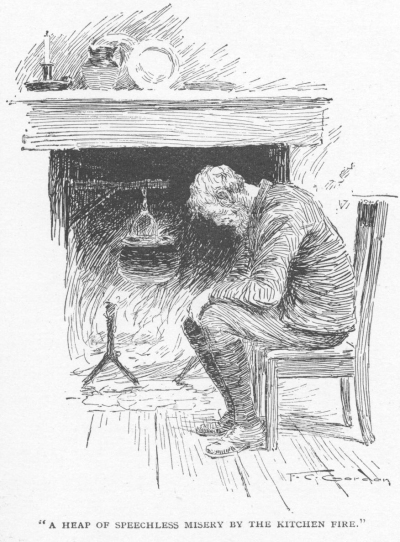
"Where is my mind?"--The Pixies
Once there was a man.
Let's call him "Chauncey Bloodmouth."
Chauncey Bloodmouth had a wife,
Chauncey thought he'd have for life.
'Til one day she engaged in sin,
One that Th'Book of Books is in.
She took a man outside the bond,
The one of which ol' Chaunce was fond.
Her plan to him she soon made plain,
"I'm leaving you, and fuck your pain!"
Bloodmouth took a bloody whim:
"Find the fucker; bloody him!"
The so-called fucker cringed and hid,
Seeing Bloodmouth flip his lid.
Mrs. Bloodmouth called The Law
('Twas the last of her he saw).
So callous Mrs. Bloodmouth was
To see sad Chaunce and call the fuzz.
Chauncey stood in a drizzling rain,
Thought,"How is it she feels no pain?"
Bloodmouth felt a pang himself,
So Bloodmouth tried to hang himself.
But just as they aided her contempt,
The cops interfered in th'attempt.
Chauncey had "to go away,"
The cops told him, "But for a day."
But one day soon enlarged to four
And Bloodmouth's sorrow plagued him more.
In the ward he would not eat
(He'd already a surfeit of defeat).
They gave him pills of sundry kinds
To numb emotions, chasten minds.
He's on these pills some two months later
And still he thinks his wife a traitor.
Pills alone can't change the facts,
As air alone can't blunt an axe.
He thinks, "Oh, were I two months dead,
"Out of this skin, out of this head.
"But there are those who want me 'round:
"'We love ol' Bloodmouth; he's profound.
"'He thinks big thoughts and loves big words,
"'Speaks of Manfred and the herds.'"
But for all his love of Keats and Byron,
Bloodmouth keeps a coin for Charon.
For should it ever come to pass,
That he can't stop feeling a total ass,
He'll once again put on the noose,
'Cause from this life, he would be loose.
The cops, the pills, the puling herds
That seek the beauty of his words,
Will never, never countermand;
Bloodmouth's going to take a stand:
"As is my life, so is my death,
"As is my pulse, so is my breath.
"They are mine; they're within me,
"So herd and fuzz, please let me be.
"O'er a life like mine, no greater boss
"Than the overwhelming sense of loss
"I feel with each and every day:
"Myself to spare, myself to slay!"
Thus if you learn that Bloodmouth's dead,
His blood'll be on his ex-wife's head.
For Bloodmouth was a lover true;
The loss he could no longer rue.
And so he met a lover's fate.
Pray not for Bloodmouth; it's too late.
"Behold me, this Hell-ward forced to eat scabs"

Behold me, this Hell-ward forced to eat scabs
Of wounds e'er dehiscent--queer Lenten meat,
Seasoned with cuckoldry's age-old defeat,
For penitent husbands of wives become drabs
(Such wound-lickers know no savor more sweet).
But, oh, you wronged husband, is justice complete
Without your fair false one infested with crabs,
And her cowardly 'complice topped with French crown?
Will you suck sores and not wish her quince
Variously verminous, known through the town
As bruised, blighted fruit that makes ev'ry man wince
From the strange nether burning to ev'ry man known?
Yes! May he burn--and more, that he dabs
On salves that soothe not from Satan's own labs.
"You came to me in another dream"
You came to me in another dream:
Remote, cold in aspect, impassive eyes.
You did not quite haunt me, but did seem to rise
From mel'ncholic milk as rich ebon cream
Dark as the day I plumbed all your lies,
Dark as the project you sought to disguise.
Hateful agenda! worth not a scream
But a pitiful sigh for my dignity maimed.
To tilt at my honor and drive home the lance!
Are you pleased with your deed and the victory claimed?
Such a sad send-up of high old Romance:
The plund'rer wins pathos, the wounded lies blamed.
Guard your foul horde, Whore, though no peace it buys!
'Twill serve as your cairn; e'en the conqueror dies.
Remote, cold in aspect, impassive eyes.
You did not quite haunt me, but did seem to rise
From mel'ncholic milk as rich ebon cream
Dark as the day I plumbed all your lies,
Dark as the project you sought to disguise.
Hateful agenda! worth not a scream
But a pitiful sigh for my dignity maimed.
To tilt at my honor and drive home the lance!
Are you pleased with your deed and the victory claimed?
Such a sad send-up of high old Romance:
The plund'rer wins pathos, the wounded lies blamed.
Guard your foul horde, Whore, though no peace it buys!
'Twill serve as your cairn; e'en the conqueror dies.
29 April 2005
The Pip of These Pages
"Love her, love her, love her! If she favours you, love her. If she wounds you, love her. If she tears your heart to pieces--and as it gets older and stronger, it will tear deeper--love her, love her, love her!"--Ms. Havisham, Charles Dickens's Great Expectations
Enforced strangers,
Who once exchanged intimate fluids,
Forefended by law,
How did such a thing come to be?
I am the solitary one,
Poring over books that find no home
In the mind of one who lives in their marks,
Because each word recalls my abandonment.
She was my muse, gone and left,
Her spit drips from my bangs
Today, tomorrow:
Scorn is the brand that burns the deepest.
Lover with new cock inside her,
As she moans herself to my erasure,
And I am alone, the Pip of these pages--
Tempestuous tedium,
Oh, to be me.
27 April 2005
"The Still, Sad Music of Humanity"
. . . For I have learned
To look on nature, not as in the hour
Of thoughtless youth; but hearing oftentimes
The still, sad music of humanity,
Nor harsh nor grating, though of ample power
To chasten and subdue . . .--William Wordsworth, "Tintern Abbey"
I have heard that Zen Buddhists believe that the world, and humanity's presence in it, are like music, and thus the purpose of enlightenment is to attune ourselves to this music, to which most of us, in our unawakened state, are largely deaf. I have been thinking about this trope for some time. As in any musical work, there movements: movements of spritely joy and playfulness, of pomp and grandeur or harrowing sublimity, of heart-wringing pathos. But I ask, what if the music of the world begins to strike the mournful chords of a requiem--a requiem to a life buried in the past, as my life with my ex-wife is? What music is there to play after the tribute to the dearly departed? Isn't it then that the music should cease with the last doleful notes?
I feel as if I am an audience member who, fearing the silence of the soon-to-be empty hall, lingers long after the maestro's last bow and the end of the applause, demanding that the orchestra reprise the overture as a way of denying to himself the finality which the requiem signals.
26 April 2005
A Portrait of the Artist as a Failed Husband

For the poems that will remain unwritten, for our children who will remain unborn, for the boundless sea of future happiness that will remain unsailed, I write this.
Though we lived as husband and wife, she alone lived in my heart until she rent and flayed her way out, pulling the ragged meat behind her.
I pour alcohol in the hole she left, but its astringency only doubles the sting. This besotted shambles shall never offend her sight, however; she recedes into a grainy smear of memories.
Every divorce decree is a cenotaph.
Oh, how I cherished the secret hope that I would die before her, so I could seek God's permission to speed to her on angel's wings, and she could . . . maybe . . . possibly . . . behold me magnificent, enrobed in Glory, as I took up sword and shield to beat a tranquil path through Chance to her final day when I would sweep her Heavenward to dissolve with her into The Greater Mind -- we the commingled smoke of two extinguished fires.
But this will never be; her love died before I could. Thus I shrink in Faith. I listen for snatches of joy with a tone-deaf ear, but miracles find not me.
22 April 2005
godpleasebringmywifebacktome
godpleasebringmywifebacktomegodpleasebringmywifebacktomegodpleasebringmywifebacktomegodpleasebringmywifebacktomegodpleasebringmywifebacktomegodpleasebingmywifebacktomegodpleasebringmywifebacktomegodpleasebringmywifebacktomegodpleasebringmywifebacktomegodpleasebringmywifebacktomegodpleaasebringmywifebacktomegodpleasebringmywifebacktomegodpleasebringmywifebacktomegodpleasebringmywifebacktomegodpleasebringmywifebacktomegodpleasebringmywifebacktomegodpleasebringmywifebacktomegodpleasebringmywiifebacktomegodpleasebringmywifebacktomegodpleasebringmywifebacktomegodpleasebringmywifebacktomegodpleasebringmywifebacktomegodpleasebringmywifebacktomegodpleasebringmywifebacktomegodpleasebringmywifebacktomegodpleasebringmywifebacktomegodpleasebringmywifebacktomegodpleasebringmywifebacktomegodpleasebringmywifebacktomegodpleasebringmywifebacktomegodpleasebringmywifeback tomegodpleasebringmywifebacktomegodpleasebringmywife back to me.
Pills sicken. I'm a waste. Sooner gone the better.
Pills sicken. I'm a waste. Sooner gone the better.
Dispatch from Samsara
Woe befalls the wayfarer (who enters the cycle of births and deaths). Therefore, be not a traveler (in samsara); fall not a victim to sorrow!--Buddha, The Dhammapada, Sutta 302
Over the past several months, many people have offered me insights and observations concerning my divorce, which my now ex-wife pursued with a singular, and quite puzzling zeal. Of all the wisdom I solicited, I was most keenly interested in that of women, who I thought could help me decipher my wife's bizarre behavior. There seemed to be a rough consensus among the women I spoke to concerning my wife's behavior. They would all tell me, "This divorce is not about you; it's about her. She's at a point in her life where she feels like she needs a change." They'd also tell me, "A woman changes a lot between twenty and twenty-four."
As much as I appreciated their kind consideration of my plight, these conclusions always seemed dissatisfactory, as if they were all too eager to justify my wife's unconscionable behavior. They seemed to me a contemporary twist on the "Nuremberg Defense": my wife was simply following the imperatives of biology; the thick ragout of blood and hormones coursing through her compelled her to her course of action.
I have to say that I categorically reject this justification, because it puts animalistic drive in a position of prëeminence. Instead of being extraordinarily wonderful and ennobling, distinctly human traits like reason, empathy and conscience become, in this behavioralist paradigm, simply vexatious anomalies, peculiarities of evolution that are undeniably present, but which should not distract us from the real explanation for human action--action that is fundamentally indistinguishable from our simian brethren.
Bottom line: my ex-wife systematically destroyed our marriage in order to pursue her own egostistical ends. Existence is, as the Buddha proclaimed, indeed suffering. Suffering in Pali (the Buddha's native tongue) is dukkha, which has no exact translation into English. The Buddha's take on dukkha is interesting, because, whereas one typically associates suffering with pain, the Buddha claims that pleasure is also a source of dukkha, because one knows the pleasure cannot last in this realm of causation, of conditioned conditions (samsara), and this also brings her suffering.
What does one attempt to achieve, then, in getting married? To carve out of samsara a little piece of nirvana? Nirvana, like dukkha, has no exact English equivalent, but is sometimes translated as "extinction." One's desire becomes extinct, or extinguished, freeing her from samsara. "Man proposes, but God disposes," I guess. It's funny, though, because many Buddhist sects around Asia have a concept of hell eerily similar to the Christian one. Consider, for instance, this display at a Thai Buddhist temple. Very Dantesque, wouldn't you agree?
I guess, all things considered, samsara ain't such a bad place to be.
Over the past several months, many people have offered me insights and observations concerning my divorce, which my now ex-wife pursued with a singular, and quite puzzling zeal. Of all the wisdom I solicited, I was most keenly interested in that of women, who I thought could help me decipher my wife's bizarre behavior. There seemed to be a rough consensus among the women I spoke to concerning my wife's behavior. They would all tell me, "This divorce is not about you; it's about her. She's at a point in her life where she feels like she needs a change." They'd also tell me, "A woman changes a lot between twenty and twenty-four."
As much as I appreciated their kind consideration of my plight, these conclusions always seemed dissatisfactory, as if they were all too eager to justify my wife's unconscionable behavior. They seemed to me a contemporary twist on the "Nuremberg Defense": my wife was simply following the imperatives of biology; the thick ragout of blood and hormones coursing through her compelled her to her course of action.
I have to say that I categorically reject this justification, because it puts animalistic drive in a position of prëeminence. Instead of being extraordinarily wonderful and ennobling, distinctly human traits like reason, empathy and conscience become, in this behavioralist paradigm, simply vexatious anomalies, peculiarities of evolution that are undeniably present, but which should not distract us from the real explanation for human action--action that is fundamentally indistinguishable from our simian brethren.
Bottom line: my ex-wife systematically destroyed our marriage in order to pursue her own egostistical ends. Existence is, as the Buddha proclaimed, indeed suffering. Suffering in Pali (the Buddha's native tongue) is dukkha, which has no exact translation into English. The Buddha's take on dukkha is interesting, because, whereas one typically associates suffering with pain, the Buddha claims that pleasure is also a source of dukkha, because one knows the pleasure cannot last in this realm of causation, of conditioned conditions (samsara), and this also brings her suffering.
What does one attempt to achieve, then, in getting married? To carve out of samsara a little piece of nirvana? Nirvana, like dukkha, has no exact English equivalent, but is sometimes translated as "extinction." One's desire becomes extinct, or extinguished, freeing her from samsara. "Man proposes, but God disposes," I guess. It's funny, though, because many Buddhist sects around Asia have a concept of hell eerily similar to the Christian one. Consider, for instance, this display at a Thai Buddhist temple. Very Dantesque, wouldn't you agree?
I guess, all things considered, samsara ain't such a bad place to be.
21 April 2005
Textual Divination
"There's a divinity that shapes our ends,
Rough-hew them how we will"--Shakespeare, Hamlet V.ii
On the day I learned that my odious divorce had been finalized, I called my friend, who is also divorced, to tell him the news. After he offered me some consolatory words, welcoming me to "the club," our conversation soon turned to things occult and conspiratorial. I told him that I had developed a recreational interest in stichomancy and bibliomancy, two forms of textual divinition, the latter typically limited to Holy Writ (early Wesleyan Methodists practiced bibliomancy: cf. the character Dinah Morris in George Eliot's Adam Bede), as a result of my recently hearing an NPR story on Jung's theory of "synchronicity," a phenomenon in which events in one's life take on a meaningful relatedness or consistency, thus defying pure chance or coincidence.
My friend, who earned a Master's in Classics, told me of a form of bibliomancy practiced by ancient Romans known as sortes Virgilianae, in which passages from Virgil's poetry were selected at random and scrutinized for prophetic import. Intrigued by this, I asked my friend if he had handy a copy of Virgil's works. He said he did, so I asked him to open his copy of Virgil's works to a random page. The passage that his eyes first lighted upon was Aeneas's account, in Book Three of The Aeneid, of he and his crew's encounter with the Harpies. Since his copy of Virgil was in Latin, he offered me his translation. I cannot remember his translation verbatim, but I found the same passage in Robert Fitzgerald's English translation, which reads as follows:
If you don't know what the Harpies are, let me give you Fitzgerald's definition, found in the glossary to his translation of The Aeneid: "monstrous creatures: birds with the faces of women; associated with the Furies."
Now, if you're familiar with the circumstances of my divorce (if you're not, see my "The Sorrows of a Thwarted Young Werther" post), then perhaps you feel the same shudder I felt as my friend translated this passage, because, I tell you, my divorce certainly me made me feel as if my ex-wife had left me "half eaten and befouled."
Coincidence? Synchronicity?
I leave it to you to decide.
Rough-hew them how we will"--Shakespeare, Hamlet V.ii
On the day I learned that my odious divorce had been finalized, I called my friend, who is also divorced, to tell him the news. After he offered me some consolatory words, welcoming me to "the club," our conversation soon turned to things occult and conspiratorial. I told him that I had developed a recreational interest in stichomancy and bibliomancy, two forms of textual divinition, the latter typically limited to Holy Writ (early Wesleyan Methodists practiced bibliomancy: cf. the character Dinah Morris in George Eliot's Adam Bede), as a result of my recently hearing an NPR story on Jung's theory of "synchronicity," a phenomenon in which events in one's life take on a meaningful relatedness or consistency, thus defying pure chance or coincidence.
My friend, who earned a Master's in Classics, told me of a form of bibliomancy practiced by ancient Romans known as sortes Virgilianae, in which passages from Virgil's poetry were selected at random and scrutinized for prophetic import. Intrigued by this, I asked my friend if he had handy a copy of Virgil's works. He said he did, so I asked him to open his copy of Virgil's works to a random page. The passage that his eyes first lighted upon was Aeneas's account, in Book Three of The Aeneid, of he and his crew's encounter with the Harpies. Since his copy of Virgil was in Latin, he offered me his translation. I cannot remember his translation verbatim, but I found the same passage in Robert Fitzgerald's English translation, which reads as follows:
Into their [the Harpies] midst my men
Attacked and tried a strange new form of battle,
To cut the indecent seabirds down in blood.
But they received no impact on their feathers,
Took on their backs no wounding cut: too quick,
They soared away into the upper air,
Leaving the prey half eaten and befouled.
If you don't know what the Harpies are, let me give you Fitzgerald's definition, found in the glossary to his translation of The Aeneid: "monstrous creatures: birds with the faces of women; associated with the Furies."
Now, if you're familiar with the circumstances of my divorce (if you're not, see my "The Sorrows of a Thwarted Young Werther" post), then perhaps you feel the same shudder I felt as my friend translated this passage, because, I tell you, my divorce certainly me made me feel as if my ex-wife had left me "half eaten and befouled."
Coincidence? Synchronicity?
I leave it to you to decide.
A Puerile Little Piece of Doggerel
Here's some silly verse of mine I just found this morning. I wrote it about twelve years ago, but had since forgotten it. I published it on my blog because I don't have time to copy it onto a bathroom stall. Though its stupid, I think it has a certain Wordsworthian quality to it.
When we sleep alone,
It's in mute anticipation;
When we sleep as two,
It's the soul's emancipation.
When we sleep as three,
We're like nestlings in a tree;
When we sleep as four,
We had better lock the door.
When we sleep as five,
We're bees in a buzzing hive;
But when we sleep as six,
We'd better start counting dicks.
When we sleep alone,
It's in mute anticipation;
When we sleep as two,
It's the soul's emancipation.
When we sleep as three,
We're like nestlings in a tree;
When we sleep as four,
We had better lock the door.
When we sleep as five,
We're bees in a buzzing hive;
But when we sleep as six,
We'd better start counting dicks.
20 April 2005
Stew-Meat for Cerberus
A one-armed man stands across the street, smoking a cigarette and looking at me. I look at him. "How many women have scorned him for his nub?" I ask myself. Nubless, I too have been scorned. Many men out there are simmering in their desire to dump cum in the velvety grip of an intimate embrace.
We are born, we wander about awhile, and we die. Everything is a show. Everything signifies. We love, spurn, ignore, move on. This is our condition.
Habeum papem! But what does it matter? Blood spilled two thousand years ago has since been washed away by as many summers' rains.
How many millenia will pass before we see a generation that will twist swaddling clothes into nooses when it sees the horror confronting it?
When we come into the world, the first sound we make is a scream.
We are born, we wander about awhile, and we die. Everything is a show. Everything signifies. We love, spurn, ignore, move on. This is our condition.
Habeum papem! But what does it matter? Blood spilled two thousand years ago has since been washed away by as many summers' rains.
How many millenia will pass before we see a generation that will twist swaddling clothes into nooses when it sees the horror confronting it?
When we come into the world, the first sound we make is a scream.
The Undeniable Grace of Functional Alcoholism
"Stay away from booze; it's no solution to your troubles." "Drinking will only make your problem worse." These and other such words of wisdom are familiar, I'm sure, to anyone who has turned to the bottle in a time of crisis. Is it really a matter of human weakness that so many not only surrender to the siren song of alcohol, but return to hear the tune again and again? The bottle sits there, waiting to anoint me with blessed oblivion. "Come to me," she says. "Rest ye a while in me, and I will ease your burden."
At heart, we all seek to be Homer's lotus eaters.
Christ's blood is wine.
I shake for liquor through the dreary march of my day. Duties discharged, I chase my new love, now that my old love has abandoned me--a new love easy to approach, willing in her submission. Would that all lovers were so.
Though I shake, I continue to function, but I want out of my own mind. It's a garment long worn, unfashionable, not in keeping with the times. Liquor shows me the heaven of naked insentience. How I wish she would take me there, now, instead of showing me its far-off vista. Perhaps I'm Moses, doomed to see the Promised Land but never to live in it.
Every drink brings an upwelling of welcome, sacred numbness: anaesthesia for the ragged Dawn-shaped wound that still weeps and festers.
I wake each morning swollen and haggard, waiting for the next lover's kiss as I bring cup to lips.
Life is not for me, anymore. It has been hostile environs for some time. Those of you who are to inherit the earth, I wish you well. Burn my corpse and pour my ashes in a whiskey bottle.
At heart, we all seek to be Homer's lotus eaters.
Christ's blood is wine.
I shake for liquor through the dreary march of my day. Duties discharged, I chase my new love, now that my old love has abandoned me--a new love easy to approach, willing in her submission. Would that all lovers were so.
Though I shake, I continue to function, but I want out of my own mind. It's a garment long worn, unfashionable, not in keeping with the times. Liquor shows me the heaven of naked insentience. How I wish she would take me there, now, instead of showing me its far-off vista. Perhaps I'm Moses, doomed to see the Promised Land but never to live in it.
Every drink brings an upwelling of welcome, sacred numbness: anaesthesia for the ragged Dawn-shaped wound that still weeps and festers.
I wake each morning swollen and haggard, waiting for the next lover's kiss as I bring cup to lips.
Life is not for me, anymore. It has been hostile environs for some time. Those of you who are to inherit the earth, I wish you well. Burn my corpse and pour my ashes in a whiskey bottle.
15 April 2005
The Lurking Fear
When it comes to discussing the conventions of the Gothic novel, I have to admit that I am somewhat at a loss, having never made any sort of real study of the genre. In fact, The Castle of Otranto is the only Gothic novel—the only Gothic novel from the eighteenth century, I should say—that I have ever read. I am certainly aware enough of the hallmarks of the genre to identify Gothic elements in other works, but I had never really paid attention to them, dismissing them as simply the necessary machinery of a novel of that genre. I suppose that I had always considered the Gothic novel a special case; it's unreality, I believed, disqualified it from the sort of attention I paid to realistic novels—novels I held in higher esteem because of their purported aim of faithfully representing social reality. The gothic novel, on the other hand, I dismissed as simply a spooky, but ultimately inconsequential, piece of entertainment devoid of any probing critical commentary or compelling insights. It is only by returning to The Castle of Otranto, by reading it a second time, that I came to understand that it did indeed have a scholarly value exceeding that of its historical significance in the development of a genre, that it does serve as a window on its times—an ornate, highly wrought one to be sure, but no less effective or useful for being so.
Before I discuss the contents of The Castle of Otranto, I will offer a few remarks about I regard it within the context of the eighteenth century novel. I have noticed the terrible plight of women in these works. The female characters are usually in a tremendous amount of jeopardy, both physically and financial (the latter largely presumes the former). That is, eighteenth century England struck me as a veritable house of horrors for anyone unfortunate enough to have been born female. Potential deflowering lurks at every turn. Every address from interested young gentlemen carries with it a tinge of foreboding. In short, every woman of that period seems one amorous misstep, one lapse of caution and judgment away from financial devastation and a brutal life of utter destitution. It is therefore fitting that the gothic novel should be in ascendancy in the late eighteenth century, a time when women have already been subjected to the horrors of sexually predatory rakehells for sixty-odd years.
One of my first encounters with the plight of women, in Daniel Defoe’s Moll Flanders, held some promise. The title character of that work is certainly a survivor in that she does not allow her early tryst with her eventual brother-in-law lead her into permanent ruination. Her incredible resiliency, and the cunning that make this resiliency possible, led me to expect that the plight of women would indeed improve in the following novels. I have to say though, that this improvement was long in coming, and subject to reversals and detours, the sort of which we find in Eliza Haywood's The British Recluse. After Cleomira, the titular recluse, and her new friend Belinda gain satisfaction in Belinda's public exposure of Courtal, the man who, unbeknownst to them, jilted them both, they retire from society, two jaded women, one deflowered and the other still virtuous, interested in nothing else than retiring to anonymous sorority. Moll, however, stays in the game, as it were, but has nothing to show for it in the end save imprisonment in Newgate.
The truly revolutionary figure in the novels we read before The Castle of Otranto is the titular heroine of Richardson's Pamela, whose virtue is compensated by her would-be rapist's hand in marriage (?!). Though often silly, I found Pamela promising. I felt that I was seeing a woman match wits with a man quite out in the open, not covertly, as was Moll Flanders's modus operandi. Part of her power of resistance lies in the fact that she writes her own story. She controls the discourse and thus eventual outcome. The women of The Castle of Otranto, however, represent what I consider to be a step backward from Pamela's revolutionary promise. In the novel, Walpole supplants the power of the woman's pen with a supernatural apparatus. The women of the novel, Hippolyta, Matilda and Isabella, are placed in a much more passive position, forced to do little than seek refuge with each other and endure Manfred's outrages until the supernatural machinery can finish its work by declaring Theodore the true heir of Alfonso, whose throne Manfred's ancestor had usurped (Walpole 104). Matilda must even be sacrificed before imperiled women's plight is over.
It also bears mentioning that, when confronted by Manfred, the woman express the wish to retire to the nearby monastery to finish their days in pious seclusion, which recalls the desire of Cleomira and Belinda to do the same, if not so pious. Admittedly, Hippolyta convinces Manfred to join her at the monastery. One could thus claim that, despite Matilda's death, the women of this novel certain prevail and perhaps triumph over oppressive patriarchy. The supernatural apparatus does seem to favor the women of this novel, but nonetheless it is a shame that this supernatural power comes at the expense of real, individual power, the sort of power of which we glimpsed in Pamela, and will hopefully glimpse again before the semester is over.
Since I was very young and first began to experience the pleasure of reading, I have been a believer in the power of the written word. I always appreciated its power to affect change, and it is reassuring to see hints that the female authors and characters of these eighteenth century works cherish a similar notion. After all, a mere twelve years after the publication of The Castle of Otranto, some strokes of the pen, albeit in masculine hands, will bring forth a new nation defiantly declaring its independence from its mother country. Perhaps this power of the pen in the hands of women is part of the reason why Walpole had to distance the time of the events of his novel. Only woman of a bygone era would be as believably passive as Hippolyta, Matilda and Isabella, seeking refuge in a nunnery.
Before I discuss the contents of The Castle of Otranto, I will offer a few remarks about I regard it within the context of the eighteenth century novel. I have noticed the terrible plight of women in these works. The female characters are usually in a tremendous amount of jeopardy, both physically and financial (the latter largely presumes the former). That is, eighteenth century England struck me as a veritable house of horrors for anyone unfortunate enough to have been born female. Potential deflowering lurks at every turn. Every address from interested young gentlemen carries with it a tinge of foreboding. In short, every woman of that period seems one amorous misstep, one lapse of caution and judgment away from financial devastation and a brutal life of utter destitution. It is therefore fitting that the gothic novel should be in ascendancy in the late eighteenth century, a time when women have already been subjected to the horrors of sexually predatory rakehells for sixty-odd years.
One of my first encounters with the plight of women, in Daniel Defoe’s Moll Flanders, held some promise. The title character of that work is certainly a survivor in that she does not allow her early tryst with her eventual brother-in-law lead her into permanent ruination. Her incredible resiliency, and the cunning that make this resiliency possible, led me to expect that the plight of women would indeed improve in the following novels. I have to say though, that this improvement was long in coming, and subject to reversals and detours, the sort of which we find in Eliza Haywood's The British Recluse. After Cleomira, the titular recluse, and her new friend Belinda gain satisfaction in Belinda's public exposure of Courtal, the man who, unbeknownst to them, jilted them both, they retire from society, two jaded women, one deflowered and the other still virtuous, interested in nothing else than retiring to anonymous sorority. Moll, however, stays in the game, as it were, but has nothing to show for it in the end save imprisonment in Newgate.
The truly revolutionary figure in the novels we read before The Castle of Otranto is the titular heroine of Richardson's Pamela, whose virtue is compensated by her would-be rapist's hand in marriage (?!). Though often silly, I found Pamela promising. I felt that I was seeing a woman match wits with a man quite out in the open, not covertly, as was Moll Flanders's modus operandi. Part of her power of resistance lies in the fact that she writes her own story. She controls the discourse and thus eventual outcome. The women of The Castle of Otranto, however, represent what I consider to be a step backward from Pamela's revolutionary promise. In the novel, Walpole supplants the power of the woman's pen with a supernatural apparatus. The women of the novel, Hippolyta, Matilda and Isabella, are placed in a much more passive position, forced to do little than seek refuge with each other and endure Manfred's outrages until the supernatural machinery can finish its work by declaring Theodore the true heir of Alfonso, whose throne Manfred's ancestor had usurped (Walpole 104). Matilda must even be sacrificed before imperiled women's plight is over.
It also bears mentioning that, when confronted by Manfred, the woman express the wish to retire to the nearby monastery to finish their days in pious seclusion, which recalls the desire of Cleomira and Belinda to do the same, if not so pious. Admittedly, Hippolyta convinces Manfred to join her at the monastery. One could thus claim that, despite Matilda's death, the women of this novel certain prevail and perhaps triumph over oppressive patriarchy. The supernatural apparatus does seem to favor the women of this novel, but nonetheless it is a shame that this supernatural power comes at the expense of real, individual power, the sort of power of which we glimpsed in Pamela, and will hopefully glimpse again before the semester is over.
Since I was very young and first began to experience the pleasure of reading, I have been a believer in the power of the written word. I always appreciated its power to affect change, and it is reassuring to see hints that the female authors and characters of these eighteenth century works cherish a similar notion. After all, a mere twelve years after the publication of The Castle of Otranto, some strokes of the pen, albeit in masculine hands, will bring forth a new nation defiantly declaring its independence from its mother country. Perhaps this power of the pen in the hands of women is part of the reason why Walpole had to distance the time of the events of his novel. Only woman of a bygone era would be as believably passive as Hippolyta, Matilda and Isabella, seeking refuge in a nunnery.
13 April 2005
Rant
"Goddamn her! Goddamn her! Goddamn her!" How many times, friend, have I screamed this, both inwardly and aloud! I want so badly to see my ex-wife succumb to the slow poison of her perfidy.
My rage is astonishingly inexhaustible, and astonishingly exhausting. It is the ourobouros, the serpent that consumes its own tail. Insatiable is its appetite, but limited its provender: soon to wink out, to implode.
Do not, however, pronounce my death as the author of these words. Speak me no Derridean shibboleths. These marks are not but empty traces, not the furrows dug by the tenaciously clinging nails of the author as he is swept toward the textual limbo of an absence of presence. Ask yourself who suffers the worse fate, Dante's virtuous pagans, or his eternally masticated Judas? Oh, to be banished to the lightless, loveless margin! I'd choose being Satan's cud over my fate.
Ecce homo! I AM HERE, I assure you, stalking Nietzsche's prison-house, beating bloody forehead and fist against its impenetrable walls.
How I wish these words could make your computer screen quiver and smoke from their splenetic intensity. But, alas, they are dumb and pliable, serenely ordered and orderly--pleasing font, regular margins.
My rage is impotent; its issue stillborn.
Apply the ointment of oblivion, false wife, and find the fly--the fly born a maggot, fed on the carrion of our love.
My rage is astonishingly inexhaustible, and astonishingly exhausting. It is the ourobouros, the serpent that consumes its own tail. Insatiable is its appetite, but limited its provender: soon to wink out, to implode.
Do not, however, pronounce my death as the author of these words. Speak me no Derridean shibboleths. These marks are not but empty traces, not the furrows dug by the tenaciously clinging nails of the author as he is swept toward the textual limbo of an absence of presence. Ask yourself who suffers the worse fate, Dante's virtuous pagans, or his eternally masticated Judas? Oh, to be banished to the lightless, loveless margin! I'd choose being Satan's cud over my fate.
Ecce homo! I AM HERE, I assure you, stalking Nietzsche's prison-house, beating bloody forehead and fist against its impenetrable walls.
How I wish these words could make your computer screen quiver and smoke from their splenetic intensity. But, alas, they are dumb and pliable, serenely ordered and orderly--pleasing font, regular margins.
My rage is impotent; its issue stillborn.
Apply the ointment of oblivion, false wife, and find the fly--the fly born a maggot, fed on the carrion of our love.
On Marriage, Money and Table Dances
To me there's something perversely, despairingly beautiful in the image of a creased dollar bill lying lengthwise across the labia of the stripper's (ahem, ... "sex worker's") upturned vagina. The beauty, I guess, rests in its maddeningly paradoxical implications: an intimacy that is truly estrangement, a contact that is not, that simply recalls to us the immense gulf between a being and all other beings. Metonymies, always metonymies, in an endless, centerless network that can never include entirely the being in her Being.
The above-mentioned image eternalizes, hypostatizes an existential problem akin to that of the figures that are the subject of Keats's meditation in his "Ode to a Grecian Urn"--a meditation that culminates in a chiastic circularity: "Beauty is Truth; Truth Beauty." The sex industry offers a homologous circularity: "Sex is Power; Power Sex." And perhaps, pace Keats, *that* "is all ye need to know on earth."
Marriage, then, seems no more than a wishul attempt to slow this dizzying circularity, to establish or imbricate some sort of Foucauldian heterotopia in which we comport ourselves to an imagined fullness and authenticity that the world, in its true character, denies.
The creased dollar bill upon the upturned vagina is, finally, the *conditio humana* redacted to its essence.
Remember, on that dollar bill there is also a symbol of incompleteness: the unfinished pyramid.
The above-mentioned image eternalizes, hypostatizes an existential problem akin to that of the figures that are the subject of Keats's meditation in his "Ode to a Grecian Urn"--a meditation that culminates in a chiastic circularity: "Beauty is Truth; Truth Beauty." The sex industry offers a homologous circularity: "Sex is Power; Power Sex." And perhaps, pace Keats, *that* "is all ye need to know on earth."
Marriage, then, seems no more than a wishul attempt to slow this dizzying circularity, to establish or imbricate some sort of Foucauldian heterotopia in which we comport ourselves to an imagined fullness and authenticity that the world, in its true character, denies.
The creased dollar bill upon the upturned vagina is, finally, the *conditio humana* redacted to its essence.
Remember, on that dollar bill there is also a symbol of incompleteness: the unfinished pyramid.
Every Fashion Victim Is a Michelangelo Writ Small
Artfulness is always gestural, always performative. It is remarkable in just how alien from nature it truly it, because the artful gesture, or artfully turned object always diverts attention from its natural origins and toward the agent who has supervened to give the gesture or object its heightened sense of singularity, which this agent has cultivated. For instance, Michelangelo’s David is not famous for the quality of the marble from which it is sculpted, because, though undoubtedly impeccable, the quality of the marble does not sufficiently command our awe and admiration. The quality of marble certainly contributes to some extent to the overall aesthetic effect of the sculpture, but our admiration is ultimately commanded by the various excisions and alterations which stand as the traces of the sculptor’s altering intervention on the original shape of the marble, as determined by nature, and later the quarrymen, who unearth the marble and divide into slabs. We invest these traces with a certain amount of significance, because we see them an inscription of the human creative power upon the very body of nature.
Michelangelo’s David is a highly revered expression of humanity’s fascination with its own creative powers, but the world is certainly rife with more trivial examples, such as those found in the demimonde of *haute couture.* "Capital-F" Fashion, as an appendage of the culture industry, is interesting because it represents agentive intervention on the surfaces of one’s own body. Fashion as artfulness, then, exchanges an absolute exteriorization of one’s creative powers represented by the plastic arts of sculpture and suchlike—the block of marble is absolutely physically and materially other than me, absolutely not-me—for the relative exteriorization of the textile arts, which adorns my external surface—a surface that is both intrinsic and external to me, a contiguity that also represents a limit, my limit. The relative exteriority of fashion as a sort of flourish unites agent and patient in that one inscribes one’s artfulness or creative powers upon oneself.
Fashion as an expression of artfulness that unites agent and patient brings to mind another peculiarity. Namely, fashion is always already refashioned. Nature already fashions each one of us with the genome; we are shaped and turned according to this information. However, because we collectively deem our natural fashion unsightly, we refashion ourselves by covering our external surface, effectively obscuring it, hiding it from view. Our bodies are the palimpsests upon which nature inscribes itself, only to be covered over by fashion of our own devising, which enables our forgetfulness of our naturalness. Sometimes nature returns with a vengeance, mingling itself with the vestiges of artfulness that we inscribe on ourselves, but a consumerist society nevertheless attempts to keep nature at bay with the commodities that promise greater ease and convenience through progress, thus establishing among consumers a sense of possible immortality if one but manages to remain alive long enough to see to market the goods that will make such an immortality possible.
Michelangelo’s David is a highly revered expression of humanity’s fascination with its own creative powers, but the world is certainly rife with more trivial examples, such as those found in the demimonde of *haute couture.* "Capital-F" Fashion, as an appendage of the culture industry, is interesting because it represents agentive intervention on the surfaces of one’s own body. Fashion as artfulness, then, exchanges an absolute exteriorization of one’s creative powers represented by the plastic arts of sculpture and suchlike—the block of marble is absolutely physically and materially other than me, absolutely not-me—for the relative exteriorization of the textile arts, which adorns my external surface—a surface that is both intrinsic and external to me, a contiguity that also represents a limit, my limit. The relative exteriority of fashion as a sort of flourish unites agent and patient in that one inscribes one’s artfulness or creative powers upon oneself.
Fashion as an expression of artfulness that unites agent and patient brings to mind another peculiarity. Namely, fashion is always already refashioned. Nature already fashions each one of us with the genome; we are shaped and turned according to this information. However, because we collectively deem our natural fashion unsightly, we refashion ourselves by covering our external surface, effectively obscuring it, hiding it from view. Our bodies are the palimpsests upon which nature inscribes itself, only to be covered over by fashion of our own devising, which enables our forgetfulness of our naturalness. Sometimes nature returns with a vengeance, mingling itself with the vestiges of artfulness that we inscribe on ourselves, but a consumerist society nevertheless attempts to keep nature at bay with the commodities that promise greater ease and convenience through progress, thus establishing among consumers a sense of possible immortality if one but manages to remain alive long enough to see to market the goods that will make such an immortality possible.
11 April 2005
The Blessing of Nothingness
I've never really had my heartbroken before, because I had never been as deeply in love as I am with my ex-wife before. If you would've met me before I met my ex, you'd find no one more alienated from, or more skeptical of, notions of "true love," "romance," than me. I was too postmodern, too hip; I cast too jaundiced an eye on the world to ever buy into those lofty fictions.
But my now ex-wife changed all that. Not volitionally, not by any overt act, but by simply being who she was. As we dated and our love grew, I came to see an undeniable authenticity in the way we related to each other. This eventually abraded away my postmodern husk, and she brought me to a state in which I could simply be myself: to love fearlessly, to relinquish the various self-protective gestures, verbal or otherwise, that had been such a part of how I engaged with the world. In a word, she disarmed me.
I have a facility for language. I wrote beautiful words to my wife, but they were not enough to keep her. She used to tell me that I was the funniest person she ever met in her life. The walls of our home constantly rang with laughter; we could communicate whole volumes of thought in a glance, in a touch. I believed we were two souls that had groped toward and found each other in this dark, adversarial thing called existence.
She was my Laura, my Juliet, my Beatrice--she was my Penelope, the woman I always wanted to come home to.
"Closure" I should seek? Relief? Impossible. Scars, whether physical or emotional, are simply the signs of past trauma that we are doomed to drag through the rest of our lives, just as we will drag our broken first marriages, in one way or another, into future relationships. Our ex-spouses will be in bed with us and our future lovers, no matter how much we try to keep such influence in check.
A core conviction of mine: the world is characterized by cruelties of greater or lesser magnitude, of greater or lesser consequence. Love is simply the handmaiden to Hatred, Contempt, and Indifference, the three Fates weaving our destinies as we slide towards Nothingness. Our minds are but feeble bulwarks against this reality, which is why no one gets out of life alive.
Someday my ex-wife and I will cease to be, and thus all that I now endure at her hands will likewise cease to be. Time heals all wounds only because it allows them fester and accumulate, ending in the demise of the wounded.
But my now ex-wife changed all that. Not volitionally, not by any overt act, but by simply being who she was. As we dated and our love grew, I came to see an undeniable authenticity in the way we related to each other. This eventually abraded away my postmodern husk, and she brought me to a state in which I could simply be myself: to love fearlessly, to relinquish the various self-protective gestures, verbal or otherwise, that had been such a part of how I engaged with the world. In a word, she disarmed me.
I have a facility for language. I wrote beautiful words to my wife, but they were not enough to keep her. She used to tell me that I was the funniest person she ever met in her life. The walls of our home constantly rang with laughter; we could communicate whole volumes of thought in a glance, in a touch. I believed we were two souls that had groped toward and found each other in this dark, adversarial thing called existence.
She was my Laura, my Juliet, my Beatrice--she was my Penelope, the woman I always wanted to come home to.
"Closure" I should seek? Relief? Impossible. Scars, whether physical or emotional, are simply the signs of past trauma that we are doomed to drag through the rest of our lives, just as we will drag our broken first marriages, in one way or another, into future relationships. Our ex-spouses will be in bed with us and our future lovers, no matter how much we try to keep such influence in check.
A core conviction of mine: the world is characterized by cruelties of greater or lesser magnitude, of greater or lesser consequence. Love is simply the handmaiden to Hatred, Contempt, and Indifference, the three Fates weaving our destinies as we slide towards Nothingness. Our minds are but feeble bulwarks against this reality, which is why no one gets out of life alive.
Someday my ex-wife and I will cease to be, and thus all that I now endure at her hands will likewise cease to be. Time heals all wounds only because it allows them fester and accumulate, ending in the demise of the wounded.
10 April 2005
Grasping, Grasping; Seizing Nothing
Bloodied and broken, I address you. I want to address you with all of the candor that is only possible to the dying or poor in spirit. If not necessarily the former, I certainly count myself among the latter.
I have been scanning, and sometimes contibuting, to an online divorce forum, and have found that most of the divorce and break-up advice seems to have one principle in common: to seize the "now" as the moment in which to take decisive action. Seductive advice indeed. But practical . . . practicable? Where is the "now?" When does "now" become "then?" When does "then" become "now?"
You see, I'm skeptical of this whole therapeutics of seizing the "now," because I doubt that there is any "now," and, if there is a "now," it is too transient, too ephemeral, to ever really be seized. To me there is only past and future, the one pouring forth and consuming the other the way a flood sweeps away everything in its channel. The future is consumed by the past, moment by moment, passively awaiting the latter's approach. The present is simply that ever-shifting, inscrutable zone of contact, of consumption.
Think about it. Each moment of your life-- this moment right now . . . this moment right now--has poured into it your individual past, which grows and grows, but never changes its essential character. You had a relationship that lasted, say, eleven years. Does this moment change that, even if you were to take some sort of "decisive action," to "sieze the now" as an opportunity to effect some radical change? Even radical change is informed by the inertial effluence, the unstoppable onrush, of your personal history. To summarize Hegel: "Everything is its Other." The facticity of your eleven-year relationship alters not, though you seize "the now" as a means of contending with it. The "now" is the frothy ribbon of the wave meeting the shore, as long as the shore itself. Can you seize that ribbon? And, even if you could, what would you have? Froth. The residue of a wave that's already receded--a wave that, moreover, had behind it the history of all the forces roiling in the deep, wine-dark sea (all props to Homer).
I don't say all this to encourage defeatism. I simply want people to realize the true nature of existence--what is past is prologue, after all. Therefore, knowing that the past is dynamic, that there is no past, only constant passing, I exhort you to luxuriate in your disappointment, in your heartache. It reminds you that you are alive, that you are a creature of History with a unique relationship to your parent. It reminds you that you are human, and that your departed lover is human, because only a human could do this to you.
A writer whose name escapes me once claimed that one could not read Proust until one had reached a stage of her life in which she will have more memories than she will make. I love this claim, because, as the poet Wallace Stevens said, "Death is the mother of Beauty."
I have been scanning, and sometimes contibuting, to an online divorce forum, and have found that most of the divorce and break-up advice seems to have one principle in common: to seize the "now" as the moment in which to take decisive action. Seductive advice indeed. But practical . . . practicable? Where is the "now?" When does "now" become "then?" When does "then" become "now?"
You see, I'm skeptical of this whole therapeutics of seizing the "now," because I doubt that there is any "now," and, if there is a "now," it is too transient, too ephemeral, to ever really be seized. To me there is only past and future, the one pouring forth and consuming the other the way a flood sweeps away everything in its channel. The future is consumed by the past, moment by moment, passively awaiting the latter's approach. The present is simply that ever-shifting, inscrutable zone of contact, of consumption.
Think about it. Each moment of your life-- this moment right now . . . this moment right now--has poured into it your individual past, which grows and grows, but never changes its essential character. You had a relationship that lasted, say, eleven years. Does this moment change that, even if you were to take some sort of "decisive action," to "sieze the now" as an opportunity to effect some radical change? Even radical change is informed by the inertial effluence, the unstoppable onrush, of your personal history. To summarize Hegel: "Everything is its Other." The facticity of your eleven-year relationship alters not, though you seize "the now" as a means of contending with it. The "now" is the frothy ribbon of the wave meeting the shore, as long as the shore itself. Can you seize that ribbon? And, even if you could, what would you have? Froth. The residue of a wave that's already receded--a wave that, moreover, had behind it the history of all the forces roiling in the deep, wine-dark sea (all props to Homer).
I don't say all this to encourage defeatism. I simply want people to realize the true nature of existence--what is past is prologue, after all. Therefore, knowing that the past is dynamic, that there is no past, only constant passing, I exhort you to luxuriate in your disappointment, in your heartache. It reminds you that you are alive, that you are a creature of History with a unique relationship to your parent. It reminds you that you are human, and that your departed lover is human, because only a human could do this to you.
A writer whose name escapes me once claimed that one could not read Proust until one had reached a stage of her life in which she will have more memories than she will make. I love this claim, because, as the poet Wallace Stevens said, "Death is the mother of Beauty."
Deus Absconditus
Deus absconditus: the God unknown to man; the God who fled, taking His justice with Him, leaving humanity, in the words of nineteenth-century British poet Matthew Arnold, "here as on a darkling plain / Swept with confused alarms of struggle and flight."
I had a moment of clarity the other night, in which I realized that what I'm going through--the whole agony of an unwanted divorce--can be explained in purely biological or anthropological terms. I'm simply an undesirable mate. After seven years of a childless marriage, despite the fact that the childlessness was the result of "family planning," my wife simply moved on to a different mate, a more potentially fertile seed-bearer.
There is no transcendental truth other than that of reproductive efficiency. All our belief in "God," "the higher Good," "first principles," "karma," what have you, are simply consoling fictions we craft to distract us from the horror of existence. There is no ideal realm; there are only fluctuations in the field. Intensities. Love is an intensity, as is wrath. If the state sanctioned my love by licensing my marriage, why can it not also sanction my wrath? I want to see my ex-wife's lover's face crushed beneath my boot.
Yet I cannot fault my ex-wife for leaving me no more than I can fault a tigress for disenterating a gazelle. What is, is--and "is" does not imply "ought." My wife ought to have gone to counseling with me in the proper spirit, but she did not. I ought to still be married to her, but I am not. I am alone, though I ought not to be.
No merit acquired; no justification through works--Martin Luther taught us that.
I had a moment of clarity the other night, in which I realized that what I'm going through--the whole agony of an unwanted divorce--can be explained in purely biological or anthropological terms. I'm simply an undesirable mate. After seven years of a childless marriage, despite the fact that the childlessness was the result of "family planning," my wife simply moved on to a different mate, a more potentially fertile seed-bearer.
There is no transcendental truth other than that of reproductive efficiency. All our belief in "God," "the higher Good," "first principles," "karma," what have you, are simply consoling fictions we craft to distract us from the horror of existence. There is no ideal realm; there are only fluctuations in the field. Intensities. Love is an intensity, as is wrath. If the state sanctioned my love by licensing my marriage, why can it not also sanction my wrath? I want to see my ex-wife's lover's face crushed beneath my boot.
Yet I cannot fault my ex-wife for leaving me no more than I can fault a tigress for disenterating a gazelle. What is, is--and "is" does not imply "ought." My wife ought to have gone to counseling with me in the proper spirit, but she did not. I ought to still be married to her, but I am not. I am alone, though I ought not to be.
No merit acquired; no justification through works--Martin Luther taught us that.
The Sorrows of a Thwarted Young Werther
My divorce was finalized just a couple weeks ago--a divorce I absolutely did not want. God help me, I still love my now ex-wife dearly. I'm really at sixes and sevens. I've been medicated now for several weeks (Clonazepam [sp?], Lexapro, and, a recent addition to the "cocktail," Wellbutrin) after a divorce-related suicide attempt won me a "voluntary" commitment to a psychiatric ward, and yet the medication just does not do enough. Every night I wake at four or five AM from a dream I have about her, unless I supplement my meds with liberal amounts of alcohol, allowing me to fall into a black, dreamless slumber. The nights I remain sober, which have grown fewer and farther between as the months wear on, are hellish and completely draining.
Before my trip to the booby hatch, I was averaging about three or four hours of sleep a night, and I would go days without eating. My inanition and dehydration were so severe that, immediately after my admission to the hospital, I was put on an IV. I had to go through detox (thoroughly unpleasant) but have been drinking steadily since my discharge in mid-February. Lest you think me an emotionally incontinent little wuss, let me say that my suicide attempt was a reaction to the fact that my life was unraveling. The constant exhaustion I felt from the insomnia I had since my wife left, the inability to eat, and the constant drinking brought me to a state of utter collapse. I felt as if all I could look forward to each day was the same thing: missing my wife, and the despair that this brought me. My work and studies were suffering. I could read nothing. I could write nothing. My mind would inevitably drift back to my utterly baffling, yet no less immanent, divorce. The reasons which my wife gave me for her leaving--I "loved her too much," "put her on a pedestal," "came to rely on her emotionally too much"--didn't seem to me insurmountable problems. I've always been a man of my word to her (Well, I did start smoking again behind her back after having quit for a year-and-a-half), and thus I pledged that I would work on those things about me that bothered her. She agreed to go to marriage counseling, though she stated repeatedy that she didn't see much hope in that. She wasn't in love with me, and didn't believe she ever could be again.
After she told me she "didn't want to be married anymore," totally blindsiding me, as we were to leave the next day to spend Thanksgiving with my brother and his wife in Kansas City, she ended up living with me for almost another month (I went to KC alone), during which time I was banished to the couch. That month was utter agony. She made no firm plans to move out, and I carried on in a husbandly capacity, though she would not let me sleep with her, or even touch her. My exasperation reached such a critical point that I flew to Madison, WI to spend Xmas break with my father and stepmother. It was during this second absence that my wife found a place of her own and packed whatever it was she decided was hers. No negotiation, no apprisals of what she planned to take. I was in Madison for nearly two weeks, and came home to an apartment full of boxes. And yet she lived with me for another week-and-a-half, claiming some delay with the preparation of her new pad!
Our separation was informal. She led me to believe that she was just having a mid-twenties crisis (I had had such a crisis myself), and needed some time apart--a marriage sabbatical, if you like. Thus appealing to my sympathies and my nobility of intention towards her, she persuaded me, the complete fool that I am, to not only sign my car--our ONLY car--over to her, but also to allow her to empty a special bank account we'd started the previous summer to save toward a trip to London--an account that I had sold many cherished books and CDs over the internet in order to fill. She said she needed the money in order to buy a new laptop computer. It was either concede that money in the account to her, or sell the computer we shared and give her half the money. Goodbye vacation fund!
After she'd been gone a couple of weeks, I was driving my "Divorce-Mobile," a Nissan Ultima with 170K miles on it that my brother was getting ready to junk, to a farmer's market here in Tucson, when I came across my wife's car--MY car--outside an apartment complex in which I was reasonably certain none of her friends lived. I got a sinking feeling in my stomach, and thus surrendered to the impulse to stop. I went to the apartment that I believed her to be in, and rang the doorbell. No one answered, but a dog inside was barking with great gusti. I then began to march around the complex, yelling my wife's name, and eventually my wife came outside, looking as if she'd just rolled out of bed (the time was 4 PM on a Friday afternoon). The was some guy I'd never seen in the doorway. Needless to say, I went insane, because I must have asked my wife thirty times during our protracted separation if she was involved with someone else, to which she invariably replied, "No." She told me to leave or she would call the police, but I lingered, begging her to explain why she had lied to me, why she had betrayed me. During that encounter, I came to the realization that I was the victim of an elaborate swindle: my wife, knowing that she'd not the resources to retain a lawyer, while I did, courtesy of my well-heeled father, tricked me into an uncontested divorce, and was thus able to get more from me than she'd otherwise get, given the fact that it was her who left and her who was being unfaithful. There I was in my absolute defeat and humiliation, hoisted on my own petard of selflessness and large-mindedness, qualities in me my wife knew she could exploit to her advantage.
She'd surprised me with divorce papers in our bank's parking lot earlier in the week. We went from an informal separation to a quickie divorce in a veritable blink of an eye. And yet, even on that day, just a few before I discovered her at that dude's apartment, she maintained that she wasn't interested in anyone else. There I was, however, outside "anyone else's" apartment. I confronted him, challenging him to a fight, but he cowered inside his apartment and said he was going to call the police. I soon left, but not before I groveled before my wife, whose look of absolute contempt is forever seared in my memory, begging for an explanation I knew I wasn't going to get.
That was the last time I've seen her in person.
I eventually left, but not before I kicked a sizeable dent in my old car's driver-side door.
The cops showed up at my apartment while I was calling my in-laws to inform them of my wife's swindling, whoring ways. They (the cops) browbeat me for a while, but I think that my wife was reluctant to press charges out of what I like to think is shame in having been caught in a lie. She did call me the following Sunday to tell me she was getting a restraining order against me, because she "needed to feel safe from me." From me! A man who couldn't love his wife more, who waited on her hand and foot the whole time we were together, who was virtually the sole source of income while she pursued a Bachelor's degree, who told her every day how much he loved her and how she was the most beautiful woman he'd ever seen! God, I adored my wife, and was constantly grateful that I found a woman who seemed to me the perfect combination of beauty, grace and intellect. She did the one thing I swore to her I'd never do: throw her over for someone else. This other guy must really be something, if my wife was so willing to speed along our divorce.
Everyone on her side of the family and mine were totally nonplussed. They told her what a good husband I was. I was committed (in the oher sense) bright, funny, articulate, and firmly on my way to a comfortable career in academia. Yet she threw it all away for this choad who probably knows far more about me than I'll ever know about him.
The Sunday on which she told me that she was getting a restraining order against me was the day I tried to hang myself, but was thwarted in the attempt. And here I speak to you across the wires, alive but not living. I'd take her back, even now, even after all this. Such was the love we shared, or, at least that I thought we shared. On the day she left, she lingered by the front door and said, "I'm scared." I asked her why. "Because I'm afraid I'm going to live to regret my decision."
I haven't heard from her in a month.
"But what a woman says to her ardent lover should be written in wind and runnning water." --Catullus
* * *
What I'm most frustrated about is that I imagine my ex-wife is much happier than me, which seems a gross miscarriage of karmic or providential justice. She committed a crime--a whole string of crimes, actually--and I am suffering the punishment. I go to bed alone each night; she apparently doesn't. I'm on a whole smorgasbord of meds that make me feel lethargic and apathetic, when not in the throes of an abiding, seething resentment; she is apparently content and fulfilled, having freed herself from me.
We were so close. We shared so many common interests. We enjoyed the same sorts of films, the same sorts of activities, the same political views, the same aspirations, and, perhaps most importantly, the same worldview. I really and truly believed that we had the foundation for a lifelong love. I wanted to grow old with her. Her face was what I wanted to gaze into as I died. When we were good, we were great. I wrote her a love poem every Christmas, and in every card she gave me was an econmium to my husbandly virtues. She took all of these cards, which I'd saved over the years, with her when she left, except one that had fallen behind a nightstand. I found it just a few weeks ago as I was refurnishing my bedroom. In it she wrote, "I love you more than you will ever know." She also took every photograph, including our wedding pictures (and their negatives), from our nearly seven years together. She took journals that we kept together, and all of my favorite novels. She has all the mementos, or should I say, relics, of a dead marriage. I imagine they're probably in a box buried under her bed, as I am now buried in her heart. She has erased me.
All of these billet doux from her now smack of insincerity or dissimulation. How could she go from those sentiments to the ones she now has, which have allowed her to treat me with such self-interest and cruel indifference, to pursue a secret agenda with such Machiavellian machinations? These questions plague me. I know I will never have the answers, and thus I fear this plague will become a terminal condition.
I love her as much now as I did when we got engaged. We married out of love, with much deliberation and forethought. We were under no duress: she wasn't pregnant, nor was I ready to ship off somewhere. And to my dying day I will believe that our marriage could have survived, had my ex-wife made slightly different choices. Now all I do is scratch my head and get drunk to dull the heartache that never subsides. I try to hate her. I catalogue in my mind all of her transgressions, but then immediately forgive her. I just want to know that she feels remorse, that she feels the injustice of how she repaid all of my kindnesses.
I would have loved her forever, because my notion of love is precisely that of Shakespeare, who said,
"Love is not love / Which alters when it alteration finds, / Or bends with the remover to remove: / O no! it is an ever-fixed mark / That looks on tempests and is never shaken; / It is the star to every wandering bark, / Whose worth's unknown, although his height be taken."
That is what I feel; that is what I believe. I therefore pray daily for a reconciliation. I keep lit a candle in the window of my heart, my wife's true home--if she could just see it as such.
Before my trip to the booby hatch, I was averaging about three or four hours of sleep a night, and I would go days without eating. My inanition and dehydration were so severe that, immediately after my admission to the hospital, I was put on an IV. I had to go through detox (thoroughly unpleasant) but have been drinking steadily since my discharge in mid-February. Lest you think me an emotionally incontinent little wuss, let me say that my suicide attempt was a reaction to the fact that my life was unraveling. The constant exhaustion I felt from the insomnia I had since my wife left, the inability to eat, and the constant drinking brought me to a state of utter collapse. I felt as if all I could look forward to each day was the same thing: missing my wife, and the despair that this brought me. My work and studies were suffering. I could read nothing. I could write nothing. My mind would inevitably drift back to my utterly baffling, yet no less immanent, divorce. The reasons which my wife gave me for her leaving--I "loved her too much," "put her on a pedestal," "came to rely on her emotionally too much"--didn't seem to me insurmountable problems. I've always been a man of my word to her (Well, I did start smoking again behind her back after having quit for a year-and-a-half), and thus I pledged that I would work on those things about me that bothered her. She agreed to go to marriage counseling, though she stated repeatedy that she didn't see much hope in that. She wasn't in love with me, and didn't believe she ever could be again.
After she told me she "didn't want to be married anymore," totally blindsiding me, as we were to leave the next day to spend Thanksgiving with my brother and his wife in Kansas City, she ended up living with me for almost another month (I went to KC alone), during which time I was banished to the couch. That month was utter agony. She made no firm plans to move out, and I carried on in a husbandly capacity, though she would not let me sleep with her, or even touch her. My exasperation reached such a critical point that I flew to Madison, WI to spend Xmas break with my father and stepmother. It was during this second absence that my wife found a place of her own and packed whatever it was she decided was hers. No negotiation, no apprisals of what she planned to take. I was in Madison for nearly two weeks, and came home to an apartment full of boxes. And yet she lived with me for another week-and-a-half, claiming some delay with the preparation of her new pad!
Our separation was informal. She led me to believe that she was just having a mid-twenties crisis (I had had such a crisis myself), and needed some time apart--a marriage sabbatical, if you like. Thus appealing to my sympathies and my nobility of intention towards her, she persuaded me, the complete fool that I am, to not only sign my car--our ONLY car--over to her, but also to allow her to empty a special bank account we'd started the previous summer to save toward a trip to London--an account that I had sold many cherished books and CDs over the internet in order to fill. She said she needed the money in order to buy a new laptop computer. It was either concede that money in the account to her, or sell the computer we shared and give her half the money. Goodbye vacation fund!
After she'd been gone a couple of weeks, I was driving my "Divorce-Mobile," a Nissan Ultima with 170K miles on it that my brother was getting ready to junk, to a farmer's market here in Tucson, when I came across my wife's car--MY car--outside an apartment complex in which I was reasonably certain none of her friends lived. I got a sinking feeling in my stomach, and thus surrendered to the impulse to stop. I went to the apartment that I believed her to be in, and rang the doorbell. No one answered, but a dog inside was barking with great gusti. I then began to march around the complex, yelling my wife's name, and eventually my wife came outside, looking as if she'd just rolled out of bed (the time was 4 PM on a Friday afternoon). The was some guy I'd never seen in the doorway. Needless to say, I went insane, because I must have asked my wife thirty times during our protracted separation if she was involved with someone else, to which she invariably replied, "No." She told me to leave or she would call the police, but I lingered, begging her to explain why she had lied to me, why she had betrayed me. During that encounter, I came to the realization that I was the victim of an elaborate swindle: my wife, knowing that she'd not the resources to retain a lawyer, while I did, courtesy of my well-heeled father, tricked me into an uncontested divorce, and was thus able to get more from me than she'd otherwise get, given the fact that it was her who left and her who was being unfaithful. There I was in my absolute defeat and humiliation, hoisted on my own petard of selflessness and large-mindedness, qualities in me my wife knew she could exploit to her advantage.
She'd surprised me with divorce papers in our bank's parking lot earlier in the week. We went from an informal separation to a quickie divorce in a veritable blink of an eye. And yet, even on that day, just a few before I discovered her at that dude's apartment, she maintained that she wasn't interested in anyone else. There I was, however, outside "anyone else's" apartment. I confronted him, challenging him to a fight, but he cowered inside his apartment and said he was going to call the police. I soon left, but not before I groveled before my wife, whose look of absolute contempt is forever seared in my memory, begging for an explanation I knew I wasn't going to get.
That was the last time I've seen her in person.
I eventually left, but not before I kicked a sizeable dent in my old car's driver-side door.
The cops showed up at my apartment while I was calling my in-laws to inform them of my wife's swindling, whoring ways. They (the cops) browbeat me for a while, but I think that my wife was reluctant to press charges out of what I like to think is shame in having been caught in a lie. She did call me the following Sunday to tell me she was getting a restraining order against me, because she "needed to feel safe from me." From me! A man who couldn't love his wife more, who waited on her hand and foot the whole time we were together, who was virtually the sole source of income while she pursued a Bachelor's degree, who told her every day how much he loved her and how she was the most beautiful woman he'd ever seen! God, I adored my wife, and was constantly grateful that I found a woman who seemed to me the perfect combination of beauty, grace and intellect. She did the one thing I swore to her I'd never do: throw her over for someone else. This other guy must really be something, if my wife was so willing to speed along our divorce.
Everyone on her side of the family and mine were totally nonplussed. They told her what a good husband I was. I was committed (in the oher sense) bright, funny, articulate, and firmly on my way to a comfortable career in academia. Yet she threw it all away for this choad who probably knows far more about me than I'll ever know about him.
The Sunday on which she told me that she was getting a restraining order against me was the day I tried to hang myself, but was thwarted in the attempt. And here I speak to you across the wires, alive but not living. I'd take her back, even now, even after all this. Such was the love we shared, or, at least that I thought we shared. On the day she left, she lingered by the front door and said, "I'm scared." I asked her why. "Because I'm afraid I'm going to live to regret my decision."
I haven't heard from her in a month.
"But what a woman says to her ardent lover should be written in wind and runnning water." --Catullus
* * *
What I'm most frustrated about is that I imagine my ex-wife is much happier than me, which seems a gross miscarriage of karmic or providential justice. She committed a crime--a whole string of crimes, actually--and I am suffering the punishment. I go to bed alone each night; she apparently doesn't. I'm on a whole smorgasbord of meds that make me feel lethargic and apathetic, when not in the throes of an abiding, seething resentment; she is apparently content and fulfilled, having freed herself from me.
We were so close. We shared so many common interests. We enjoyed the same sorts of films, the same sorts of activities, the same political views, the same aspirations, and, perhaps most importantly, the same worldview. I really and truly believed that we had the foundation for a lifelong love. I wanted to grow old with her. Her face was what I wanted to gaze into as I died. When we were good, we were great. I wrote her a love poem every Christmas, and in every card she gave me was an econmium to my husbandly virtues. She took all of these cards, which I'd saved over the years, with her when she left, except one that had fallen behind a nightstand. I found it just a few weeks ago as I was refurnishing my bedroom. In it she wrote, "I love you more than you will ever know." She also took every photograph, including our wedding pictures (and their negatives), from our nearly seven years together. She took journals that we kept together, and all of my favorite novels. She has all the mementos, or should I say, relics, of a dead marriage. I imagine they're probably in a box buried under her bed, as I am now buried in her heart. She has erased me.
All of these billet doux from her now smack of insincerity or dissimulation. How could she go from those sentiments to the ones she now has, which have allowed her to treat me with such self-interest and cruel indifference, to pursue a secret agenda with such Machiavellian machinations? These questions plague me. I know I will never have the answers, and thus I fear this plague will become a terminal condition.
I love her as much now as I did when we got engaged. We married out of love, with much deliberation and forethought. We were under no duress: she wasn't pregnant, nor was I ready to ship off somewhere. And to my dying day I will believe that our marriage could have survived, had my ex-wife made slightly different choices. Now all I do is scratch my head and get drunk to dull the heartache that never subsides. I try to hate her. I catalogue in my mind all of her transgressions, but then immediately forgive her. I just want to know that she feels remorse, that she feels the injustice of how she repaid all of my kindnesses.
I would have loved her forever, because my notion of love is precisely that of Shakespeare, who said,
"Love is not love / Which alters when it alteration finds, / Or bends with the remover to remove: / O no! it is an ever-fixed mark / That looks on tempests and is never shaken; / It is the star to every wandering bark, / Whose worth's unknown, although his height be taken."
That is what I feel; that is what I believe. I therefore pray daily for a reconciliation. I keep lit a candle in the window of my heart, my wife's true home--if she could just see it as such.
Subscribe to:
Posts (Atom)